
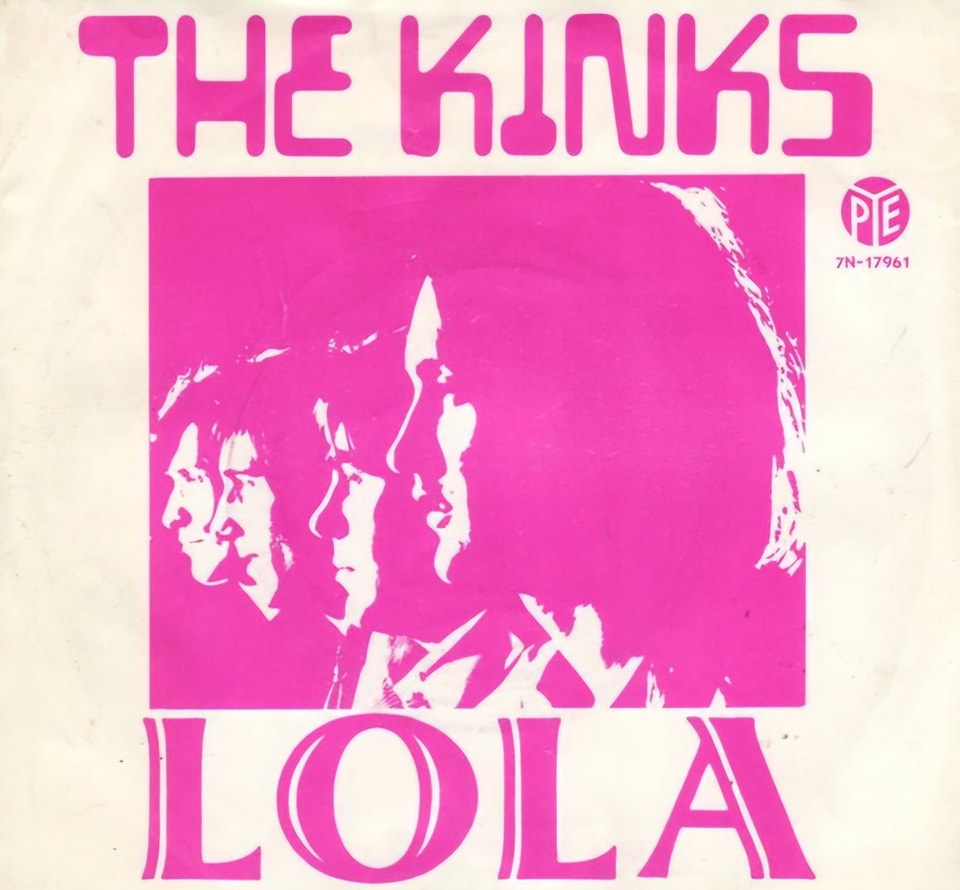
In 2022, I had the honor of interviewing the Kinks’ Dave Davies when he was promoting his second autobiography, Life on a Thin Line. Inevitably our conversation turned to the band’s 1970 comeback hit, “Lola,” which peaked at No. 2 on the Billboard chart, becoming the first-wave British Invaders’ most successful single on this side of the pond.
With “Lola” now back in the news due to Moby’s ill-informed (Kinks-shaming?) comments about the song, cluelessly calling it “gross,” transphobic,” and “unevolved” — and Dave’s own epic clapback, along with trans punk icons Jayne County and Ginger Coyote coming to the Kinks’ defense — I am revisiting the legendary Kinks guitarist’s interview. He opened up about his own fluid sexuality, and he explained how “Lola,” a song he’s always been proud of, was created in very different society 55 years ago.
to @thelittleidiot Moby’s criticism of our song LOLA these are the words sent to me and Ray from our dear friend trans icon @jaynecounty27 #JayneCounty. I am highly insulted that MOBY would accuse my brother of being ‘unevolved’ or transphobic in any way. https://t.co/hBFmLPdMKH pic.twitter.com/qYcxoMc03d
— Dave Davies (@davedavieskinks) March 22, 2026
“When [the song’s meaning] came to light, people were quite, quite shocked. But actually nowadays, it’s really quite a very common subject: gender, talking about ‘girls will be boys and boys will be girls,’” Dave told me. “We’re going through a big change in attitude and feeling and ‘what are we’ and ‘why are we.’ So, it’s very topical now.”
“Lola” — which Dave said was inspired by his brother/bandmate Ray Davies’s dinner date with Warhol muse Candy Darling, although Ray has denied that claim — detailed a romantic encounter between a befuddled straight, cis man and the titular trans woman that he meets in a Soho nightclub. The topic was controversial in 1970, with some radio stations fading out the track before its twist ending or even refusing the play the single at all, but perhaps “Lola” would generate outrage today for different reasons and be deemed politically incorrect (hence Moby’s kneejerk misinterpretation of the song’s intention).
However, “Lola” was considered downright groundbreaking and progressive more than a half-century ago, with the man in the classic story-song ultimately accepting (or even remaining smitten with) Lola, despite discovering her gender identity.
“Obviously there were a lot of people we knew who were transgender at the time, and we knew were a lot of gay people, but when the Kinks first started [in the 1960s], homosexuality was illegal in England,” Dave pointed out. “So, there were a lot of people that were having problems with their demonstration of their sexuality or how they wanted to appear, and we were at the beginning of all that.”
In Life on a Thin Line and his previous memoir, 1996’s Kink, Dave wrote about his romantic relationships with musician/actor Long John Baldry and music producer Michael Aldred, along with a few other same-sex trysts and a missed opportunity to engage in a threesome with the Rolling Stones’ Brian Jones, whom Dave had “always fancied.” Dave, who has been married twice to women and has been in a serious relationship with writer/photographer Rebecca G. Wilson since 2012, explained to me, “After a lot of soul-searching in those early years, it seemed quite apparent that I was not bisexual or homosexual.” (Maybe “fluid” or “pansexual,” terms that did not exist in the mainstream in the ‘60s or ‘70s, would better describe his sexuality.) But he spoke fondly and frankly of that “really fantastic period” of shame-free sexual awakening in his youth.
“Obviously I experimented with my sexuality, being an inquisitive young man,” he said matter-of-factly. “I wanted to know what was going on when I was young, and I still do; I’m still very curious about world events and new things. And sometimes we have to find out about these things, and sometimes we don’t even know at first. That time in the ‘60s was a big opportunity for finding out things, experimenting with sound, with painting, with movies — with sex! It’s like all these opportunities suddenly reared their head. You have to remember that there had been some really rigid concepts in place at the time, and that was a bit of a worry. There were a lot of people that didn’t like ‘camp,’ a flamboyant way of experimenting with your sexuality or however you want to be. But in my case, I experimented. I had male friends — that I stayed friends with — that I had male-to male adventures with.”
Dave and his older brother were always “distinctly different from each other,” he told me. (“Ray was like a documenter of information, and I was so wild, experimental with life and music and sexuality.”) As the youngest of eight children, with six older sisters, Dave was “very heavily influenced by women,” which helped him get in touch with his feminine side — a side that was unfortunately suppressed in so many boys, including Ray, during an era of slow-to-change gender norms.
“I count myself very lucky to grow up in that environment,” said the self-declared “baby” of the Davies family, fondly recalling singing show tunes with his sisters in the family living room and playing dress-up. “I liked to dress up when I was a boy, like wear my sister’s clothes and stuff, just to have fun. But on the outside, there were very strict constraints about behavior. A lot of my friends at school growing up, they decided a long time before they left school what they were going to be accountants. And we need to get accountants, of course! But it was a more rigid mindset. I was always encouraged to dance and sing and have a good time. … At a very young age, I realized that life is art.”
I don’t wanna show the guy up, but Moby should be careful what he says. the cockettes
And their friends used to follow us around on tour. We appreciated them. Why is Moby being so rude about this simple song? We’re not trans phobic. Why does he have to have a go at us?— Dave Davies (@davedavieskinks) March 23, 2026