

The Eldest Daughter, the debut album by Florida-born indie-folk artist Gatlin that sees its deluxe reissue this week, might have been ever-so-slightly overshadowed by Taylor Swift’s The Life of Showgirl, which coincidentally featured a song called “Eldest Daughter” and was released on the same day last year. But rest assured, this fearless (no pun intended) singer-songwriter very much has her own unique voice.
Inspired by her conservative Christian upbringing in Florida (as, you guessed it, the oldest of three children), and how she has processed and made peace with her childhood trauma since coming out eight years ago (she even re-read her teenage diaries during the recording process), Gatlin Thornton’s album is heavy at times. “I think that Christianity and my relationship with God was so tied into my identity, and growing up, I was very much taught that I was born bad. I was born evil, and God is the only thing that is good. That’s a really damaging way to grow up,” she explains, sitting with Licorice Pizza Records’ LPTV in Studio City right before her in-store performance. “I had to learn how to trust myself and believe that I was good.”
But The Eldest Daughter is also laced with wry humor, whether it’s the clever play on words in “Florida Man” (the comma is silent); the diaristic, nostalgic memories of Gatlin’s first girl-crush in “If She Was a Boy”; the rebellious declaration in “Jesus Christ & Country Clubs” when she sings, “I’m going to hell because girls are fun”; or that moment in “Man of the House” when she proclaims, “My cats can be gay if they want to!”
And that humor definitely comes through in Gatlin’s charming and candid LPTV interview (as seen in the video above and Q&A below), in which she opens up about undergoing ketamine therapy; dissociating during interviews (thankfully she didn’t during this one!); the whole “Florida Man” viral phenomenon; going (temporarily) no-contact with her family; donning empowering male drag in her music video; her ever-shifting relationship with spirituality; and, yes, gay cats.
LPTV: I’d love to start by asking about the significance of the title The Eldest Daughter, because I know you grew up in a conservative, religious family.
GATLIN: I think I was in this process of really doing a lot of healing with my family dynamic, and really a lot of things were coming to light. And so, naturally, I’m going to write about it.. And everything I was writing about was pointing towards being an eldest daughter and all of the pressures that come along with that.
What was your family’s dynamic, in terms the pressures you felt as the oldest of three kids?
I felt like in a lot of ways the truth-teller, the protector, another parent.
Did you feel you had more expectations placed on you, because you were the leader of the pack? When you’re the eldest, you’re the kid that does everything first.
Or you’re the guinea pig!
Yes! And also, parents are usually much harder and stricter with the oldest child. By the time the later kids come around, they’re much more chill.
It is crazy, the difference. I think also because when [the oldest is] female and the baby [of the family] is male, the gender of it all… yeah, there was a big difference. I wasn’t allowed to have sleepovers, or what I was consuming in media was just very strict, versus with the baby it was free reign.
I do want to get into specific songs on the record that address your childhood, but in general, what were you revisiting or maybe even reinterpreting when you were making this album?
I think it really started with my queerness and figuring that out. And then it was not only an issue with my family, my queerness, but then to talk about it publicly. It was almost more of a big deal when I decided I wanted to start talking about it and letting other people know! Because I think that’s a Southern culture thing: having this presentation of being perfect and everything is all put together, and not wanting the judgment from other people. So, it felt like I had to just full send it and go all the way there, of being honest and being open publicly in my art and my songs.
When did you come out?
When I was 19. Now I’m 27.
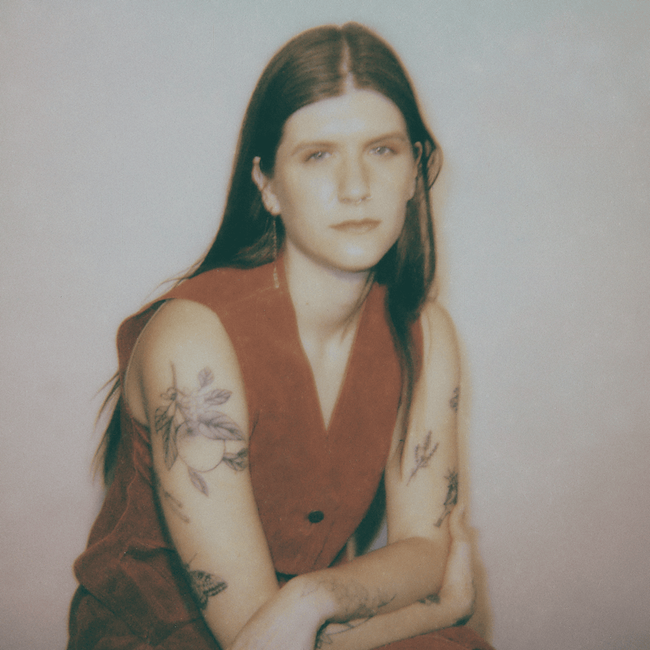
(photo: Dualtone Music Group)
So, it was relatively later in life for you.
Yeah. And it was bisexual. I came out as, “Oh, I have a crush on this girl.” But even at the time, I was like, “But I’m not going to do anything about it,” because I was still in the church. And so, it was very interesting, the way that I even presented it to my family and my community. It was like, “Everyone start praying for me! I have feelings for a girl!” It took me a really long time to process it and be OK with it myself. And then I was still dating men, so I think maybe my family would view it as I only came out two years ago, because that was when I was really [started] dating women.
Did they think it was a phase?
Yes. And obviously it wasn’t a phase!
Where do they stand with all this now?
It’s a process. I think they’ve come a long way from when it started. The song on my album “Love Me” is a song to my mom, kind of about right when I came out and she was saying extremely hurtful things. It has come a long way since then, but I still am struggling with it, because I do think that there is a difference between tolerating something and celebrating something about someone. I want this part of me to be celebrated.
How did your mother react to “Love Me”? I assume she’s heard it and knows it’s about her?
Yeah, I did show [my family] all of the music before it came out. It’s a hard thing that we’ve been having to navigate, because for me, this is my story and I’m just trying to be honest and it’s my way to process. I was like, “I’m not trying to hurt you through this!” But I think she did take it as hard to hear.
You mentioned this crush that you had on a girl, which was sort of your sexual awakening. The song “If She Was a Boy” is about that. Tell me about that real-life experience.
I wrote that [two years] ago, but from the perspective of 19-year-old me, when I was in that place of “I have feelings for a girl, everyone start praying.”
Did you really want to “pray the gay way”?
Oh, man. Yeah. I truly believed that if I acted on that [crush], I would go to hell. And so, it was a product of the environment I grew up in, and was in. I was living in Nashville [at that point]. I was at a Christian school and surrounded by other Christian kids and deep in the church. I grew up Baptist, and then we went to an evangelical Presbyterian church. It was very much: “Go spread the word of God, go convert everyone.” It was fear-based. I didn’t want anyone to go to hell.
This seems like it was traumatic, and yet you seem very untraumatized. You’re sort of laughing and joking as you talk about it.
I think maybe that’s just my way of coping with it. I’ve done a lot of work about all of this. I’m currently doing ketamine therapy. It’s really rocking my world.
I don’t know if you ever acted upon that crush at age 19, or if that woman knows about it. But I do believe I’ve read that you wrote about her in your diaries, and it was finding and re-reading those diaries — and in the process rediscovering your 19-year-old self — that spurred much of this album.
Yeah, because that was kind of the first moment when I began to really question. Maybe it was because I wasn’t living in Florida anymore; I was in Nashville. I felt in the space to start questioning. Before I was like, “Well, I’m as religious as it comes,” but I finally had the space to start questioning these feelings, and then that just stirred up kind of an entire deconstruction of faith, of politics, of what my family dynamic was, of gender. That was the catalyst.
Is it weird when you visit home? Is it one of those cliché situations of awkwardly being at the dinner table with people who don’t share the same beliefs you have now?
Yeah. I mean, I think a lot of people are having a hard time because of the political climate right now. [I didn’t go] home for the holidays [last] year. It’s my first time not going home for the holidays, but the beautiful thing about it is I have this chosen family and a beautiful community of friends and the queer community. I had a wonderful Friendsgiving and there was just so much love and acceptance.
I do think the whole notion of chosen family is very important. I assume you’re not religious anymore, at least not the religion you were raised in, but are you still spiritual, or do you still have some kind of faith in your own way? How do you define your faith, or are you just completely agnostic or atheist now?
Thank you for asking that! I love talking about it! I’m definitely very spiritual. I’m kind of like, re-finding God. For a while I had to separate from it, because there was a lot of pain attached to God. But it wasn’t God — it was people and humans that would corrupt it. I’m kind of in my journey of finding out what [faith] looks like. I’ve been in a lot of discovery, looking into different religions, reading the Bible again and seeing what I feel about this, now that things have kind of calmed. I think I’m just searching right now.
Is ketamine helping with that? I don’t know much about ketamine therapy.
I’ve been seeing this therapist for like eight months. I went to this place, got prescribed the medicine. We refer to it as “medicine.” It’s been very helpful for me. I don’t think it’s for everyone, but she had suggested it. I think it’s just been a way for me to reprocess things or create new neural pathways, because I can logically know something so well, but my body would still react. Even this process of doing interviews for the record and talking about the way that I grew up and family things… I was doing a podcast [recently] and I fully dissociated mid-podcast. And so, it’s just like, “Oh, there’s still work to do.”
I hope you don’t dissociate during this interview! Actually, you’re welcome to dissociate if that’s what you want to do, but hopefully you’re OK with how this interview is going so far. Do you mind me asking what the podcast question was that triggered that response?
I think it was just something about my parents and what they thought about me. And I just was like, “Annnnnd… I’m now no longer in my body.” It’s a body-keeps-score thing. The body remembers.
Well, if anything I ask bothers you to the point that it would make you disassociate, please let me know.
It would have a few months ago, but I have done a lot of work and I’m much better.
I’m glad to hear that, because as I get into asking about specific track, we’re obviously going to get deeper into this. I did want to ask about “Jesus Christ & Country Clubs,” because I love the line :“I’m going to hell because girls are fun.” That’s a great line.
I think that song is more me being a little bit angry. Growing up, I wasn’t really allowed to feel anger, or I didn’t feel like I was allowed to be angry. It felt good to get some of that out. It’s about hypocritical Christianity, like MAGA Christianity, and how the Jesus I knew wouldn’t be acting like this. It was really therapeutic for me to write that and to feel angry about it.
Which song on the record is the most therapeutic for you to perform live?
That one’s really fun. I feel like at shows, that’s the one that people really respond to and get excited about. “Love Me” is one that I have not been able to sing live without crying. I’m very deeply uncomfortable, but I think that is a good thing. It also has allowed for people who are there at the show to make me feel safe and make me feel seen. And I think it makes the space feel very safe.
Another track, “The Hill,” is about religion as well. There’s a line in it about how walking away from Christianity was the greatest loss of your life and the hardest thing you ever had to do. I imagine that’s another cathartic and/or difficult song to perform live.
Yeah. I think that Christianity and my relationship with God was so tied into my identity, and growing up, I was very much taught that I was born bad. I was born evil, and God is the only thing that is good. That’s a really damaging way to grow up. And so, leaving that, I had to relearn… not relearn, but I had to learn how to trust myself and believe that I was good. All of these things that were very difficult to do. It felt like I was completely losing myself. And I think for a lot of people who grew up in Christianity, that’s why it’s so hard to question it or to walk away from it, because you have grown up thinking that’s how life is. And then, also, my whole family is in it. And church is also such a wonderful place for community; I had so many friends and I felt so loved. So, it was a really hard thing to walk away from. And yeah, that was a painful song to write, but I think a good one. It phrases it almost in a Stockholm Syndrome kind of way.
https://youtu.be/O_Mpp3qR6hw?si=yqep6nBamGo2ST8M
When you talk about the community, did you lose a lot of friends or family members when you came out and changed the way you were living? Did you lose a lot of support? Did you have to make new friends?
It was a process, like a year’s process. I was living in Nashville at the time and a lot of my friends were all kind of coming out of it at the same time, which was really nice and felt less isolating. Family relationships changed, definitely. And that’s sad and heartbreaking, but also OK.
You do approach all this with a bit of humor, like I said before. You have a song called “Florida Man,” which I love because if you ever read The Onion or even the real news, there’s always a headline along the lines of, “Florida Man Does Some Crazy Shit.”
Have you done the thing where you put your birthday and then “Florida Man”? Google your birthday and “Florida Man,” and there’s always going to be something!
Ha! So yes, Florida has a bit of a reputation that’s probably somewhat deserved. But there’s a comma, at least an implied comma, in your song title, because you basically say, “I’m never going back to Florida, man!” It’s a fun play on words. So, tell me about this song, because there’s a lot of humor, but also a lot of anger in this too. It’s kind of like an F-U Florida, or at least that’s how I’m interpreting it.
I think now, retrospectively, I view “Florida Man” as this metaphor of almost who I was when I was living there, playing my role in my family dynamic and not being who I was and not questioning and being in the closet and all of these things, I kind of view it as, “OK, I’m never going back to that.” Through honestly writing this album, I kind of got to reclaim Florida as mine.
I hope anyone reading or watching this interview who’s unfamiliar with your music doesn’t think The Eldest Daughter is an entirely a sad, mopey, angry record! So, I’ll cite another example of your lyrical humor, in “Man of the House.” My favorite line in the album is from that song: “My cats can be gay if they want to.” I’m all for gay cats. I’m all for cats living their truth.
Let the cats be gay!
Yes! But what is “Man of the House” really about? Because that’s a loaded term — patriarchy, gender roles, all that.
Yeah, I was kind of claiming that for myself. In the visualizer I did, I was in male drag. I had a beard and the camo and I felt awesome; I feel like it unlocked something in me. When I wrote it, I was living in an apartment by my own, by myself, and paying the bills from my music, which was wild. And at the time I wasn’t talking to my parents, because you go through breaks, or at least I do with them.
Are you talking to them now?
No, not right now.
Oh, I’m sorry.
It’s OK. So yeah, I think it was the first time that I was like, “OK, I’m a little bit on my own. Let me figure this out.” I just felt powerful. It was a time of my life when I was like, “I’m a strong person!” So, I wrote “Man of the House” and I was like, “I get to live by my rules. My cats, if they want to be gay, can be gay!”
Are your cats gay?
One of them definitely is gay. For sure, gay. My partner says that I project a little bit. Like, I’m almost forcing them to be gay, when they might not be.
You’ve just got to let your kids, even your furry kids, be who they want to be, whether they’re gay or not. That’s one thing we’ve learned one thing from this interview! I also want to ask about “Soho House Valet,” because your press release called it the “north star” of The Eldest Daughter. It’s about a very specific conversation you had with a family member, I assume at Soho House…
I wrote that a week after I had this f fight with my dad walking into Soho House Warehouse in Downtown L.A., and I wrote it to process that. I was very honest in a way that I hadn’t in my writing before. I viewed the song as, “Well, this is for me. No one else is going to hear it. So, who cares? I’ll just say everything.” And then I sat with it for a while and I was like, “You know what? I think I do want to put this out. And I want to make an entire album that is this honest and is for myself.” I guess why it’s the north star. It was like the catalyst of, “OK, I want to start making music in this way.”
Do you mind me asking why you’re not speaking with your parents right now?
I think it’s a rollercoaster. Relationships change. And right now for me, as this album’s coming out and I’m talking about it, and there’s been fights, and the political climate… it’s just a lot. And I’m kind of like, one thing at a time. Sometimes space is good for healing as well. When things are really emotionally charged, sometimes it’s OK to say, “Everyone needs to take a break. Take a break and breathe for a second.”
But even though you have differences of opinion, different political beliefs, different religious beliefs, I understand that your parents always been very supportive of you of being an artist from very young age. And that’s interesting. Maybe some people would assume they’d be like, “Be a housewife! Don’t pursue a career!” But they always encouraged you to be musician.
Yes, and I feel like that’s such a gift, because I’ve had so many friends who parents were like, “OK, be practical.” And doing music is not practical. It’s a hard thing to go out and pursue. And especially my parents are not creatives and not in this world, so they didn’t really understand it, but they were willing to learn with me and figure it out. So, I’m like, “OK, see? If you can do that with music, then you can do that with me being gay, too!”
Did you always want to play music?
Yeah, when I was young, it was always, “What do you want to be when you grow up?” And I’d say: “A singer! I want to be a singer. I want to write my songs.” Maybe in middle school I thought I would do something practical, but then in high school I got diagnosed with an anxiety and depressive disorder and I was like, “Music is the only thing that makes me happy.” And I was really supported in that.
So, your parents supported you in your mental health journey and got you help, et cetera?
Yes, they did. So, you see, they’re not… there’s so many redeeming qualities. I had a lot of great things in my childhood.
I’m glad to hear that. So, let’s end things on that positive note. You were obviously unpacking a lot of stuff from your adolescence when making this record that was painful or dark, but there’s nostalgia on The Eldest Daughter too. What did you revisit that was nice to remember?
I think the last track, “Kissimmee,” which is where I was born. I had gone back to Florida and was able to go out with some queer people and discover so many beautiful people in Florida and be with family in a really positive way. And I was like, “Oh, I have this nostalgia for childhood again!” Coming back and being able to be who I am and really love who I am in Florida, I think was really good for me — because I’d kind of had this view of loving a place so much, but not really being loved by it. Maybe that’s a generalization, but you can find pockets and find people anywhere.
My last question is, what advice do you have for people who are going through something similar — whether it’s coming out, or just in some way breaking away from their upbringing — about they can be as grounded as you seem to be now?
Oh, wow, thank you! … I think being honest with yourself and learning how to love yourself is such an important thing. And I think I was able to do that by spending a lot of time by myself and doing a lot of work, but also finding community and finding people who celebrate you for exactly who you are. And it doesn’t need to be a lot. I think that has made all the difference with me — just having my few friends who are like, “I see you. I love you. And I’m here for you no matter what.”