

A decade ago, James Graham was on a high. After almost breaking up Scottish post-punk band, the Twilight Sad, a few frustrated years earlier, he and core member Andy MacFarlane had formed an unlikely bond with one of their idols, Robert Smith of the Cure, who turned out to be a Twilight Sad superfan. (Smith paid them the ultimate compliment by covering one of their songs, “There’s a Girl in the Corner.”) Thanks to the unwavering encouragement from the alt-rock legend that Graham now jokingly calls their “publicist, booking agent, all of the above,” the Twilight Sad suddenly had a new lease on life, touring America for the first time in 2016 when Smith personally invited them to be the Cure’s opener. In 2023, they even got to play three nights at the hallowed Hollywood Bowl as the Cure’s support.
But these professional triumphs also served as unfortunate bookends for a tumultuous time in Graham’s personal life. In 2016, his mother and “best friend” was diagnosed with early-onset frontotemporal dementia, and in the middle of the 2023 Cure tour, as his mother’s physical health deteriorated, so did Graham’s mental health, forcing him to quit and return home.
“We were supporting the Cure in South America, and I just woke up one day and I basically couldn’t move. My body just told me, ‘Well, you’re not doing this anymore,’” Graham recalls. “Luckily enough, I was surrounded by some good people. Robert was very much one of those people who told me, ‘You need to get better. This for you doesn’t matter right now. The most important thing is you need to go and get well and be ready for these opportunities again someday.’” Graham’s mother passed away two months later, right when Graham, who was nearing his 40th birthday, was also adjusting to becoming a new parent himself.
The Twilight Sad’s brilliant and gripping sixth album, It’s the Long Goodbye, was actually 80 percent complete by 2023. But considering everything that has transpired since 2019’s It Won’t Be Like This All the Time (the Twilight Sad’s lineup has also now been slimmed down to just Graham and McFarlane, with Arab Strap’s David Jeans currently on drums and Mogwai’s Alex Mackay on bass, plus of course some of this record was remotely written during COVID-19 lockdown), it is, understandably, only coming out now — fatefully, just three days after Graham’s mother’s birthday.
This seven-year gap is the biggest in the Twilight Sad’s discography, but it has been well worth the wait, as It’s the Long Goodbye is the sort of deeply personal, vulnerable, and fearless mid-life work that could only be borne from years of life, love, and loss. “It was a conscious decision to go, ‘If I’m doing this, then it has to be as honest as possible. There’s no hiding behind anything this time,’” Graham explains. “Not that I was hiding before, but I enjoyed the play with metaphors. It was like a bit of a shield, just so that it wasn’t giving away too much. But with this one, it was like, ‘If you’re going to do this, it has to be all on the table, warts and all.’ Because that’s what this is. This experience has been truly horrific and also enlightening and real-life, no bullshit.”
And in some ways, It’s the Long Goodbye (which features Smith on “Dead Flowers,” “Back to Fourteen,” and the especially gut-punching single “Waiting for the Phone Call”) even serves an unintentional companion piece to the Cure’s own recent grief-driven comeback album, Songs of a Lost World, which “holds a really special place” in Graham’s heart because he got to hear many of its songs previewed on the 2023 Cure/Twilight Sad tour.
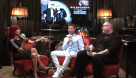
In the extended video above and edited Q&A below, Graham opens up about his struggles with anxiety and depression, fatherhood, the influence that strong women like his mom had on his life and art, Smith’s contributions to the new Twilight Sad album, the pursuit of happiness, and why men tend to bottle up their emotions. “Men don’t talk about their feelings as much. I’m going to talk about my feelings whether you fucking like it or not,” he quips. And in this compelling interview, he does just that.
LYNDSANITY: There is a lot to unpack with this album, so I’ll be asking some tough questions. I hope that’s OK.
JAMES GRAHAM: Yeah, that’s totally fine. Feel free to ask whatever. I’m here to be as open and as honest as I possibly can be. The record means a lot, and there’s a lot that’s went into it. So, maybe I need some Kleenex…
Well, I don’t want to make you cry!
No, crying’s a good thing! We need to go over that stigma!
Well, maybe some people who listen to It’s the Long Goodbye will cry too, because even though it’s about some very personal things that happened to you, I think it will be relatable for a lot of people.
I hope so. I hope so.
I know that this album was partially inspired by your mother’s health issues, and then her passing and the grief you were processing at the time. And that all began over a decade ago, and then you started making the record started seven years ago, and then COVID also happened. So, this is the longest gap between Twilight Sad records, and a lot has happened since 2019.
Yeah, I think it would’ve been a long time anyway, but COVID as well added its own pressures and things for everybody. Whatever situation you were in, we all had to deal with it. So yeah, I lost my mother two years ago to early-onset dementia. … She was in her sixties when it kind of came on. It was the part in life where I was just about to become a father myself, and there was so much excitement and things on the horizon that we were all really looking forward to as a family. But she got diagnosed in 2016/2017, shortly after we’d finished our first tour with the Cure in America, and for seven years she deteriorated. It’s an absolutely horrible disease that basically strips a person of everything they are. And I was watching my sons grow and her fade at the same time, and at one point it felt like they met in the middle, if you know what I mean. And I found that it was too much. I got really [mentally] ill trying to cope with all the things like fatherhood, losing the person that brought me into the world, the pandemic. I’m an anxious person anyway, and I’ve dealt with depression in my life as well, and have managed to keep a lid on it. And music was a way of getting my feelings out. It was a cathartic thing for me. I was so lucky that I found a friend in Andy that was giving me the platform to be able to release my emotions and feelings, instead of bottling them up inside.
I think a lot of the things that led to my illness was I was bottling things up. I was doing the “just get on with it” thing, and that was against everything that I’d told everybody to do and people that liked our music. I was always saying, “Talk about these things,” and I didn’t even listen to myself. And yeah, I got really ill. And then my mom passed on. We were supporting the Cure in South America, and I just woke up one day and I basically couldn’t move. My body just told me, “Well, you’re not doing this anymore.” It told me that I needed to stop.
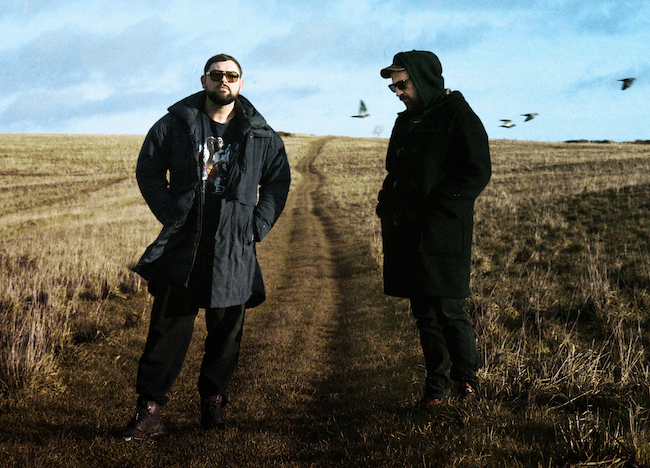
The Twilight Sad today (photo: Abbey Raymonde)
It’s so interesting that you can think you’re fine, but the body will tell you you’re not. Your emotional state will manifest in physical ways.
Yeah. It’d never happened to me before. I’ve dealt with all those kind of things before: anxiety, depression. It’s just part of my makeup, and I understand that now more than ever. But yeah, my body told me, “No, this isn’t happening anymore.” And luckily enough, I was surrounded by some good people. Robert was very much one of those people who told me, “You need to get better. This for you doesn’t matter right now. The most important thing is you need to go and get well and be ready for these opportunities again someday.” I mean, for him to do that was … he’s not just the person that I look up to as a musician, a songwriter, everything, but on a truly human level, that was a really important thing to be told.
The Cure recently released Songs of Lost World, and that album was informed by what Robert was going through, like deaths in his own family. I don’t know if you two bonded over that or talked about it, or if he gave you any advice, or if even the fact that he was working on a grief album of sorts inspired what you were doing with your own music.
Well, we’d started the album already. Obviously, it took seven years. I had to make sure that when I wrote the songs, when Andy gave me the music, that I only wrote when I was able to find a space in my life and my head to be able to get out what I needed to. But especially on the Cure tours that we did, the most recent ones before the new Cure record, I got to watch those songs being performed live for the first time, practiced onstage for the first time, soundchecked for the first time. And I made sure that I was there watching, because I am a massive fan, and I thought it would be really disingenuous to any other fans out there to have been given the opportunity to be there and [not] really experience that. So, I made a real promise to myself that this isn’t just about going along for have a fun time. We did have a fun time, but it’s a learning experience. I wanted to take away so much from that tour. But just to be able to see Robert up there on the stage pouring his heart out as a person, not “Robert Smith of the Cure” … that was kind of stripped away at points during those songs. I felt there was a real human connection, and the fact that he was being so honest through his music was truly inspiring. I was in the middle of having to deal with my mom’s disease whilst we were on that tour, and [Twilight Sad] songs like “Waiting for the Phone Call” were kind of in my head when I was away, every day waking up going, “Am I going to get that phone call to come back home?” And it wasn’t the coming back home that was the problem — it was just knowing what I would have to go home to. But to see Robert up on that stage was inspiring to me.
Sort of tied into why I was asking about Songs of a Lost World is some of the Cure’s lyrics are very obtuse or full of imagery, but Songs of a Lost World has some of the most direct, literal lyrics Robert has ever written. And I feel that is the case with It’s the Long Goodbye, too. Was that a conscious decision on your part, or did the songs just kind of come out that way?
It was a conscious decision, because it was a case of, if I was going to do this again, I needed to prove to myself to be able to do it. And “Waiting for the Phone Call” is a pretty universal thing now, I’m finding. We all at some point in our life are in that situation. … So, I’d say that yeah, it was a conscious decision to go, “If I’m doing this, then it has to be as honest as possible. There’s no hiding behind anything this time.” Not that I was hiding before, but I enjoyed the play with metaphors. It was like a bit of a shield, just so that it wasn’t giving away too much. But with this one, it was like, “If you’re going to do this, it has to be all on the table, warts and all.” Because that’s what this is. This experience has been truly horrific and also enlightening and real-life, no bullshit.
When you’re hit with things like that in your life and you step away from all the band and things like that, when you come to a point where you’re losing somebody that you really love, nothing else matters. So, it was like, this is how this has to happen. It can’t be shrouded in mystery. This is what it is, because ultimately I’m reaching out in a way to see if anybody feels the same way as me. And I’m finding that people are connecting with this record. Death is a thing that we don’t talk about a lot. I feel the Mexican culture does talk about it and embraces their loved ones that they’ve lost, and I think that’s such a beautiful thing. I think in our culture, people are scared to upset people or talk about something that might hurt, but getting to the other side of that hurt is a relief and a weight off your shoulders. I was always conscious of that, but a lot of the times when writing songs, I wasn’t in a good place and things were hazy, so what came out, came out. Looking back now, I can genuinely start to understand why I was feeling the way I was. At the time, life didn’t have any reasons for me or didn’t make sense. Life just didn’t make sense to me. But I was a father as well, and I had to get up every morning and be there for my family, and that was more important than this record or anything else that I do. That was what pulled me through it, really: Andy’s music and my family. And I have this body of work now that shows that it was a real thing.
Which tracks on It’s the Long Goodbye embody that newfound clarity most for you?
There were certain songs like “Dead Flowers.” I have been listening to the record a lot, to [prepare to] talk to people about it and perform it at some point, and every so often a light bulb kind of goes on, like, “Yeah, I knew you were feeling this way, but you’ve managed to subconsciously talk to yourself, in a way that your future self can look back and go, ‘I understand why you felt completely lost at the same time.’” It’s quite weird on reflection, looking at the record now. There’s a lot of strange coincidences. This record was, first of all, meant to come out possibly in the start of [2026], but it got pushed back a few times and then it just happened to land on [March 27], and the 30th is my mom’s birthday — which wasn’t planned. I only literally realized it maybe about three weeks ago. I hadn’t orchestrated that. The universe seemed to have decided that that’s when it should happen, and so many other things like that have been happening to me. I don’t know what I believe in, but something weird is happening as far as coincidences. When we booked the studio to go to the studio to record, we booked it in London and [Andy] booked a studio [Battery Studios] that he thought was really good. And we were talking to Robert one night and he was like, “Oh yeah, that’s where we recorded [the Cure’s] first two or three records” … And we were with [producer] Mike Hedges, who’d recorded those records as well with them, and it was just like, “Whoa. This is just a lot of universe stuff happening.”
They say don’t meet your heroes, but you met Robert, and suffice to say, it went extremely well. I can’t even imagine how thrilling it would be to have one of your favorite artists from your youth, one of your main influences, not only like your band, and not only eventually cover one of your songs and bring you on tour, but also appear on your own records and become a real friend. That’s the most ringing endorsement I can imagine. Is there still some fanboyish part of you that’s pinching yourself over all this?
The surrealness is fading a bit. It has a lot more since we’ve got even working together. I mean, watching him every night play three hours of just some of the best songs of all time, and just afterwards talking about the gig with him like a couple of friends in a bar around the corner, I feel extremely lucky. And I’ve wrestled with this in my head as well. It’s just like, “Why us? Why?” As a band, we’ve never been pushed in front of the global media or whatever. We’ve kind of existed in our own world, and you don’t know who’s looking or if anybody will notice you. You certainly don’t expect Robert Smith to notice you, because you’re constantly working, trying to make it work. And for that to happen, it was … yeah, I honestly feel, why us? I see so many other bands that also deserve to be championed, but he saw something in us. He saw through the music as well. He could see the way that we care about our artwork. We care about everything to do with it. And he saw that we didn’t want to become rock stars or anything like that. He could see that we were doing it because it was something we loved doing. And to have been given the opportunity to share our music around the world and introduce our music to different people, it’s still pretty magical and pretty unbelievable in many ways. When we’re with each other and hanging out and playing, it doesn’t feel that way. It just feels like friends playing a gig. But when you step back and actually have to look at the big picture — speechless.
Have you ever outright asked Robert what was it about your band that captivated him? He really has gone out on a limb for you guys. He’s practically a Twilight Sad publicist at this point.
Publicist, booking agent, all of the above! Yeah, he tells us. There was an interview [that Smith did] recently … and all the things that I would hope to find in a band that I loved, he said about our band, which is just amazing. That is the dream. There’s nobody that’s given me enough confidence to be myself other than Robert, besides Andy and the band. Andy and Robert have such a great relationship as well. Robert says that Andy and I combined are like him. We are quite ying and yang in some ways, Andy and I, but because Robert sees music from Andy’s point of view, and he sees it from my point of view as well, he gets both of us. Having the connection with Robert has given us the confidence to push ourselves musically as well. This album was always going to be what it is, but I wanted to make him proud. I wanted to show him that all his hard work and belief was merited, all the opportunities that he’d given us, everything. I wanted to show him that it’s through hard work and doing what we believe in, that’s the gratitude. He’s been a big part of why we’re still doing this, and I’ve realized I need it in some way, and I think he can see that within me as well. So yeah, there’s lots of things he has told us, and that’s enough. He’s done so much. I am constantly just like, “Are you not fed up with us yet?”
I assume Robert is proud of this new album. And I assume he was one of the first people outside of the band to hear It’s the Long Goodbye in its entirety.
He had the demos. When we started, we gave him all the demos. We met up in London with Robert and Mike Hedges one night, just for fun, really. … We played some acoustic songs for them, which was nerve-wracking, and then Robert said, “Get the demos on, let’s start listening to them,” and pulled out a massive notepad and had notes on everything! It was absolutely one of the most nerve-wracking things you can imagine, sitting in front of two of your idols with brand-new songs, going, “What do you think?” But Robert had so many suggestions. And it was always suggestions. It was never, “Do this, do that, do this.” He was like, “Try this, try that, see if that works. I like this, I like that.” And that put us to work. Instead of being told what to do, it made us go away with that idea and do the work. And he does that quite a lot with us. He plants little seeds with us. It’s our own thing, it’s us that’s doing it, but I can see that he’s gently nudging us in the right direction.
Was there any one really awesome thing he suggested that was really important to this record?
Two things spring to mind right away when you ask that question. The first one is on “Back to the Fourteen,” he introduced a melody. The song was good and I was happy with it, but he just put this really simple, beautiful melody in, and it was like the cherry on top. It was like, “Oh, that’s perfect. Beautiful.” Something that you didn’t know you needed that now you can’t live without, that kind of thing. And then on the last song on the album [“TV People Still Throwing TVs at People”], he added so much. He just told us to let it breathe, because it wasn’t as long as it was and it was more direct, whereas now it gradually builds and introduces some of the melodies that are going to come later in the song. He really helped that song breathe. And now that I listen to it, that song wouldn’t be what it is without his advice.
This is a question I would ask of Robert as well: There’s a cliché that artists make their best music when they’re in a dark place and struggling, and if they’re in a good place in personal life, their art becomes boring. Is that all true for you, or do you believe that in general?
It’s a good question, because when you’re younger and starting a band, you make the first record and you’re like, “I made it for a reason. There was something to write about.” And then you’re like, “What’s next?” And that thought sometimes popped into my head. I’d be like, “Maybe something bad needs to happen to me, so that I can write another record.” But I got really fed up with that quite quickly. As I started to write more records and genuinely be in an OK place, obviously there’s darkness and light in everybody’s life, but I didn’t have to go searching for it. Life really does bring it to you. I’ve got so many things that I’m so grateful for in my life. I’ve got a beautiful family. I’ve got a wife, my partner, who’s just been there for me, and our lives are fantastic together. But life just slaps you around the face sometimes. I always thought you might have to go searching for that stuff. Somebody once said to me, “Oh, people really like to come and watch you suffer,” and I was like, “Yeah, I suppose so.” But to feel like something bad needs to happen for you to make a record, I don’t believe that anymore.
Obviously, It’s the Long Goodbye is an extremely personal record, inspired by some very specific things that happened in your life. How do you make an album like that relatable and universal, so it’s not just like fans are listening to your audio diaries or therapy sessions?
I just think the themes that I’m talking about this time, everybody does go through it at some point in life. A lot of [journalists] have told me about their situations, and that’s why they’ve connected to this record. That’s why they’ve asked to speak to me. That’s amazing for them to be brave enough to want to put themselves into a situation to talk to me about that kind of thing. It’s given me a bit more faith and humanity, because it’s pretty hard to find that right now. Those little moments of connection with people and conversation is more important than ever. I don’t know, I think we need to listen to each other more instead of talking at each other.
It’s also only been somewhat recent that celebrities and artists have been open discussing their mental health.
Well, the conversation has to be open somehow. And music is the thing that connects so many people, so if it can be the starting point for a conversation in any walk of life, then it’s a good thing. I’ve been listening to a lot of podcasts with artists that I know that have been through something similar, as far as the mental health side of my story. Matt Berringer from the National and Alan [Sparhawk] from Low did a really good conversation. Matt Berringer and David Letterman did a YouTube thing. And as they were speaking, I was like, “Oh, thank God” — or thank somebody whoever’s up there — “I’m not alone.” I could hear people that do the same job as me, and they were talking about the exact same feelings and how they’ve managed to get out of it. So, I’ve taken a lot of inspiration, as far as my own health, from people that have opened up about it. And I know the effects of speaking out, from being the person that’s been listening instead of talking about it.
Have you ever had a feeling of almost like guilt, though? A lot of people would see a musician who’s supposedly living the dream, making music and touring the world, and might be like, “Shut up, suck it up. Your life is great. I work at McDonald’s. I have a much tougher life. What are you whining about?” Have you experienced any of that?
Well, where I grew up, men don’t talk about their feelings as much. I always felt that I was different from that and never really felt part of that. I was in many workplaces — I worked on building sites, kitchens, catering, offices, I’ve done everything — and the attitude was the same in those industries, and it was just it felt unhealthy. I think it’s just very much a man thing as well: that it’s a sign of weakness, perhaps, to show your emotions. I want to be the antithesis of that, because that’s not the way to live your life. It actually puts you in a darker place than actually talking about it. I think that was my worry of putting my feelings and emotions out in the world. That’s why I’m quite apprehensive about putting the record out, because I am a worrier. I’m very anxious. But I just think this is what I do. … I don’t want to bother anybody or hurt anybody or annoy anybody, but at the same time, I’m going to talk about my feelings whether you fucking like it or not.
I feel that men like Robert Smith and some of his post-punk peers, like Morrissey and Ian Curtis or Tears for Fears, might have given young boys, maybe even yourself, the permission to be more emotionally expressive. Like, they made it cool to be sad, or to cry, or admit to being insecure.
A hundred percent, without a doubt. And I think that’s something that we touched on earlier about: why does Robert connect with [the Twilight Sad]? There’s those reasons as well, a connection in being that type of person that’s not afraid to do that. I’m afraid to do loads of things, honestly. I’m so afraid of life in general. But I’m not afraid to do this. I don’t know where that comes from. It’s just amalgamation of all my experiences and the people that have come out in and out of my life. I’ve had very strong female characters, leaders, in my life. My grandmother was such an important person in my life. My mother was my best friend. And I was the only boy in my class in school; I was with five other girls in my class. I think within that, there was learning the lessons of sensitivity and strength in ways not through the male gaze, if that makes sense. And that’s been a big part of my makeup as well. I don’t enjoy lads, lads, lads and all that. It’s not how I work. My best friends, apart from Andy, have been women — like, my wife as well is my best friend. So, I think I had that in my makeup and my DNA, because of the people that were around me. But then when I heard these [male artists] being truthful and honest and the heartfelt and talking about those things, it was completely transformational and inspirational. Without those records and those inspirational people, I wouldn’t be doing what I’m doing here, talking to you.
I’m so glad you are talking with me! I have two last questions — one serious, and one not-so-serious. The serious one is: How your mental health these days, after emerging from all this darkness?
Better. I wouldn’t have been able to do any of this if I didn’t feel that I was on a forward trajectory. I’m feeling a lot more hopeful. I can see things that I’m excited and happy about. My kids give me a life and just make me so happy and test me so much. It’s been the biggest test of my life. I go for walks early in the morning and listen to my favorite records on those walks, because I realize if I sit in the house and let things stew, those [negative] feelings will come back and it’ll be history repeating itself. I want to be a happy person. I want to enjoy my life. I’m so fed up with being so worried about everything and scared of everything. I want to be very present every day, instead of thinking two steps ahead of myself. So, it’s a learning process. With the tools that I’ve got now, if those feelings start to come again, I know how to fight them. I know the things that are bad for me and good for me, and I feel like I’m doing the right things. These conversations have been great for me. I’ve been coming off interviews, and I’ll come off this interview as well, feeling lighter and better about things. And the fact that you’ve so kindly asked me these questions and you’re interested in what we’ve done is a positive thing, and I need to remind myself of that — not [remind myself of] when I was not feeling great, which is putting it pretty mildly, but I think I’ve been testing myself, because of all the buildup to the album and the thought of it being out there. And I’ve known how to deal with it this time, compared to when I was in the middle of just the unknown of my mum, the unknown of my own health. I really feel like I’m beginning to move forward with my life now. I know there’s going to be a few bumps in the road, but I think I’m more equipped to deal with them than I was. I’m stronger than I thought I was.
I’m so happy to hear that! And I’m so happy that you enjoyed this interview, because I did too. OK, and my not-serious question is, from one Cure fan to another: What’s your favorite Cure album? I just want to know from my own curiosity, no pun intended.
I think it’s Disintegration. I know that that’s the easy one to say, but it is a fucking great record. I mean, any album with “Plainsong” and “Pictures of You” … but I was listening to Faith the other day, and I love the coldness of that. The Head on the Door is also beautiful.
There’s no wrong answer, I guess!
Yeah, there isn’t, but I just know it’s quite the obvious answer when somebody says Disintegration. To be honest though, the last one [Songs of a Lost World] has a place with me for many reasons, apart from just the music. That was an overall experience for me. I probably will say that that’s the record that’s affected me the most, because I was quite present and watching it happen, in a way. That holds a really special place in my heart.