

photo: Martyn Goddard
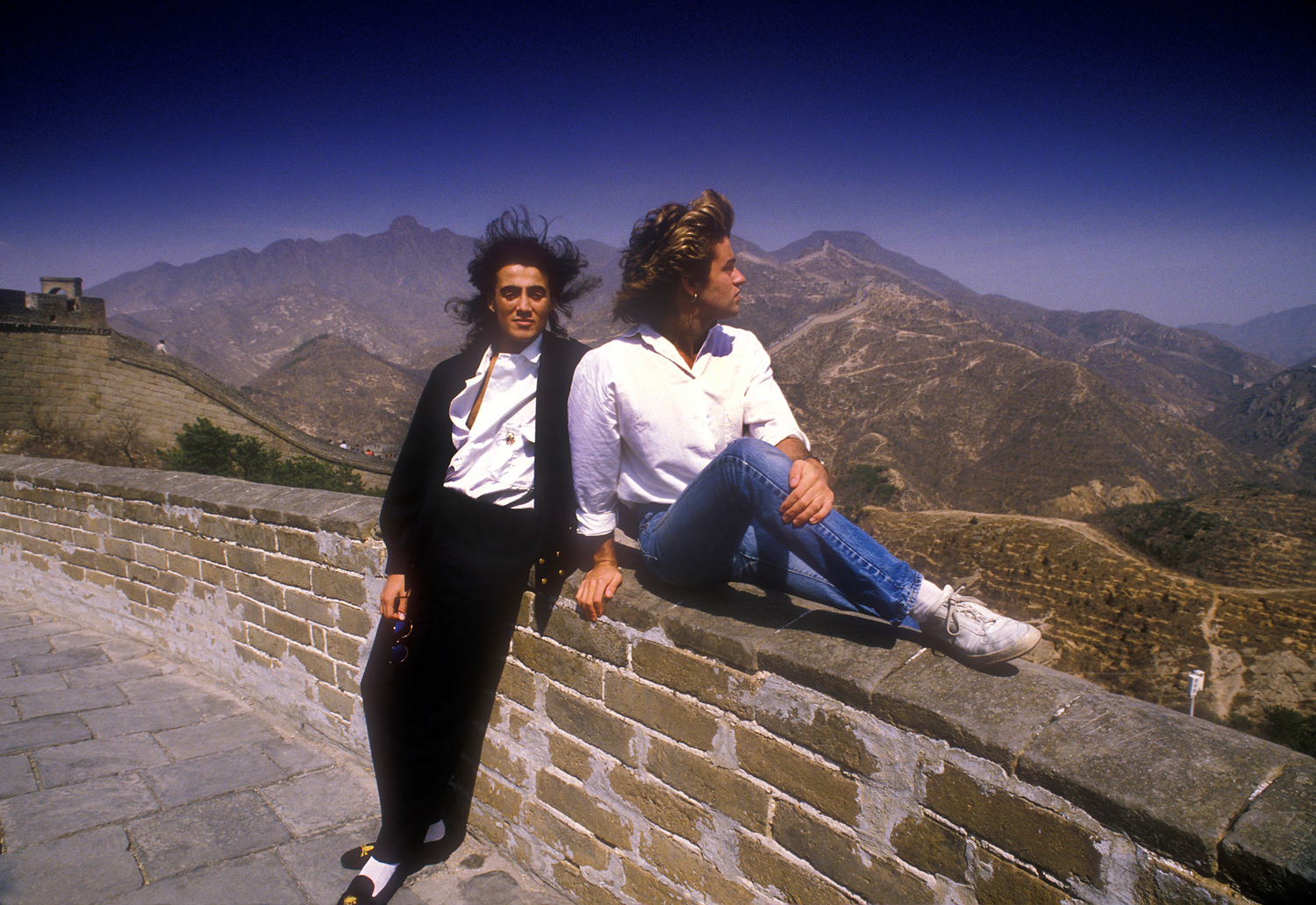
In 1985, Wham! became the first Western pop act to play Communist China, and British New Wave filmmaker Lindsay Anderson came along to capture George Michael and Andrew Ridgeley’s historic expedition. However, Anderson’s resulting $1.5 million documentary, If You Were There…, was scrapped, because both Michael and Wham! manager Simon Napier-Bell were displeased that Anderson had focused more on China than on the actual band and had utilized far too little concert footage.
“I’m not surprised that Lindsay’s cut was scrapped,” muses Mike Christie, director of a new and very different documentary, Wham! 10 Days in China. “It didn’t really have a vision. It’s a nice, interesting kind of film, but it didn’t have a drive. It’s quite ambient. It’s certainly not a pop documentary.”
Christie’s film is actually a third cinematic attempt to document Wham’s Chinese trip. In 1986, just 14 months after their concerts in Beijing and Canton (now Guangzhou), the U.K. pop duo played their farewell show much closer to home, at London’s Wembley Stadium, where a drastic recut of Anderson’s film, edited by music video director Andy Morahan and retitled Foreign Skies, was screened for a Guinness World Record-setting 72,000 fans — including Christie’s own sister. (Anderson’s If You Were There… didn’t get a public screening until 2024, due to it being blocked by Michael and his estate.) Four decades later, Christie gained access to “nearly 21 hours of film rushes; that’s like a hundred cans of film” — none of which, remarkably, was actually utilized by either Anderson or Morahan — to create Wham! 10 Days in China, which finally tells the full and fascinating story of the band’s journey to the East.
“We didn’t know this was even going to be possible, to be honest,” marvels Christie, known for his work with Suede, Nick Cave, Pet Shop Boys, New Order, and Bono. “When we first started talking about this project with the Wham! collective including Andrew, weirdly, the [Anderson] footage was kind of in cans in a warehouse. I don’t even know where the warehouse was! But no one was in a hurry to dig this footage up. … It took something like seven or eight months for all the footage to arrive; we were getting in dribs and drabs.”
Once Christie was able to go through all of 21 hours of footage, however, he was “left slack-jawed” by many unseen, unscreened moments — including a scene of near-naked heartthrob Michael getting a massage while venting to the cameras about, ironically, the pressures of being constantly followed by cameras. (“He’s not wearing any clothes! He’s wearing a towel!” laughs Christie.) But the filmmaker also was fascinated by the more serious moments, like a tense Bein ng press conference and a harrowing airplane emergency involving a touring band member (more on those incidents later). “What began to emerge, especially through body language, was a lot of the narrative stuff became really, really apparent,” Christie explains. “You were seeing discomfort, unhappiness, [along with] moments of joy, moments of fun.”
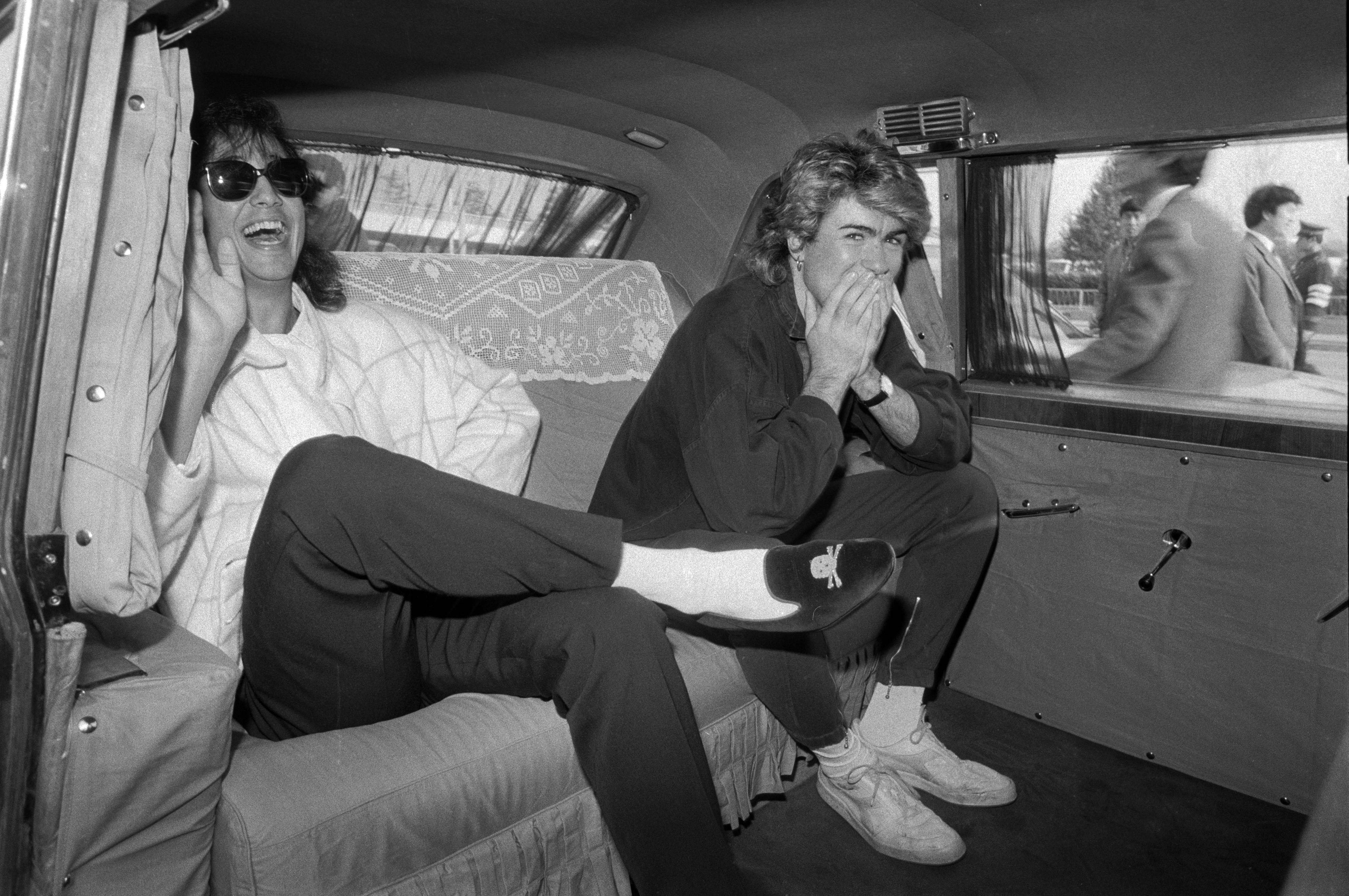
photo: Neal Preston
But to fully understand and appreciate the context of 10 Days in China, one must look at the whopping 18 months that led up to those 10 days — when Napier-Bell, author of the memoir I’m Coming to Take You to Lunch: A Fantastic Tale of Boys, Booze and How Wham! Were Sold to China, wined and dined more than 140 Chinese government officials to make Michael’s dreams of superstardom and world domination come true.
“The very first meeting [with Michael and Ridgeley], we went to dinner with them and said, ‘Right, let’s discuss what we’re going to do.’ And George said, ‘We want to be the No. 1 group in a year. And that’s all you’ve got,’” recalls Napier-Bell, who took on Wham! as a client after witnessing their “sensational” breakout performance on Britain’s Top of the Pops. “I just laughed and said, ‘That’s impossible. The No. 1 group has to be the No. 1 group in America, because it’s 60 percent of the world market. And you haven’t even had a record released there yet! Let’s sit down and talk about reality.’ And he said, ‘Nope. No. You’ve got a year.’”
“We both had the desire to succeed. It was what drove us,” says Ridgeley. “It was essential for us that Wham! was a success — and a success for George, personally. He was discovering himself. He hadn’t found the person, or at least he hadn’t been able to reveal to himself or bring out the person that he was. But he was very strongly opinioned, and he had great belief in his talent.”
Napier-Bell’s business partner, Jazz Summers, responded to Michael’s bold challenge by equally audaciously suggesting, as Napier-Bell remembers: “‘Maybe we could make you the first Western pop group ever to play in China, and that would get on the news all over the world. And that would rush things a bit.’ And George said, ‘Yeah, I like that! Go and do that.’”
One week later, Napier-Bell found himself in China. “I was sitting in a hotel room alone, in this big, bleak country… thinking, ‘What have I got myself into? Who could actually say yes?’ And of course, the answer was [premier of the People's Republic of China] Zhao Ziyang, probably the second- or third-most powerful person in the entire world. How was I going get from this hotel room to him and persuade him? That’s what I spent the next 18 months doing — and did.”
Brokering the deal for Wham!’s two China performances took Napier-Bell, who appears in Christie’s documentary, a bit longer than his demanding new client’s one-year deadline — because at first the veteran music manager, who’d worked with the Yardbirds, T. Rex, and Japan, didn’t really have a strategy. Many of Napier-Bell’s early days in that lonely hotel room were spent cold-calling random politicians, telemarketing-style.
“I got a book from my embassy, which gave me the list of all the ministries and the names of the ministers. And I sat there in that hotel room and started calling at top of the list,” Napier-Bell explains. “Every time I got through to a ministry, I tried to find somebody who spoke English. Sometimes it was just a cleaning lady, or sometimes it was someone high up who knew. And I said, ‘Could you tell them Simon Napier-Bell has come from London and would like to take the minister to lunch?’ I figured that would sound quite important to them: a foreigner, a posh name, and a good lunch. After I’d gotten a 10th of the way through the book, I gave up; it had been two days and I couldn’t do it anymore. I was too miserable. So, I flew home and told everybody it was going ‘very well.’”
But a month later, Napier-Bell returned to China and “amazingly, when I checked in the hotel — the same hotel — they said, ‘You’ve got a message.’ And the message was from the Minister of Home Resources or something like that: ‘Yes, I’m about to come to lunch with you.’ So, I called back and [arranged] the lunch with him, and he turned up in a Chairman Mao suit — you know, those sort of blue boiler suits. He’d come on his bicycle; a minister in most countries would arrive in a Mercedes, but he was on his bicycle.”
As it turned out, the minister had mixed up his Rolodex contacts and mistaken Napier-Bell for a coal buyer he’d done business with. But that didn’t matter to Napier-Bell, who seized the opportunity. “I had my first minister!” he laughs. “And from then on I went back every month and bought lunch for him, and each month he invited more ministers, because I did good lunches. I paid for good lunches, and they didn’t get good lunches because they didn’t have nice big expense accounts. And bit by bit by bit, I got more and more people to come and have lunch with him. And each time, I went a little further in talking about the benefits of youth culture.”
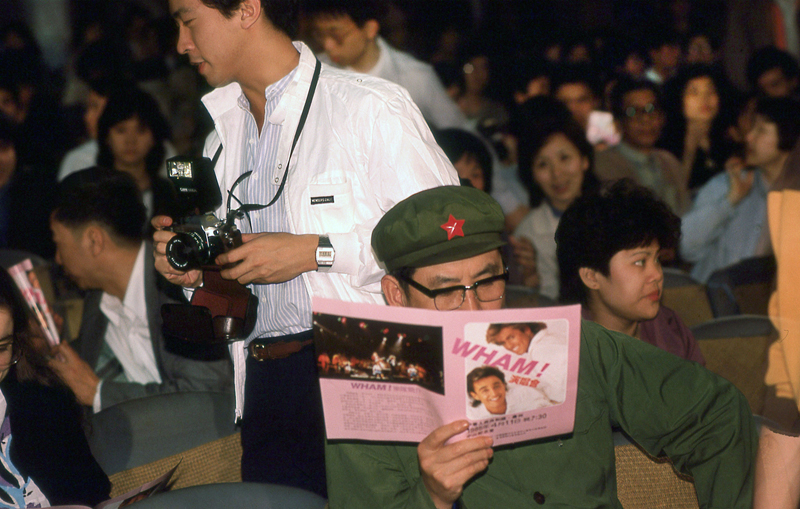
photo: Martyn Goddard
Once Napier-Bell had successfully wooed enough government officials, the dates were set for April 7, 1985, at the 12,000-capacity Workers’ Gymnasium (the biggest stadium in Beijing at that time) and April 10 at Canton’s 5,000-capacity Sun Yat-sen Memorial Hall. Napier-Bell then returned home to London to work on lining up the international film crews that would give Wham! all the publicity that Michael craved. But the China announcement befuddled the European media.
“All the press said, ‘Why Wham! — why not a nice left-wing [artist] like [British protest singer] Billy Bragg, someone who’s very sort of anti-capitalist? That’s what the Communists would like.’ And I said, ‘No, no, you don’t understand. What the government wants is a group who are not political, who don’t upset the status quo, who just are happy to get on the stage and play. They don’t want someone coming there and getting into politics,’” Napier-Bell explains. “So, to [Chinese officials], Wham! were the sort of the nice kids who did as they were meant to do by their government.”
“We were a pop band. We weren’t encumbered by any kind of weight of youthful social consciousness. We were just really the essence of what we were, which was two young men having the time of their life,” shrugs Ridgeley.
Amusingly, another U.K. band wanted to be the first Western music act to play China, but Napier-Bell was determined to stop them. “Famously, Simon Napier-Bell sabotaged Queen’s attempt,” Christie chuckles. “Queen’s management were vying to take Queen there, so what he did was he made up — we call it a ‘deck’ now — a deck of Queen and a deck of Wham! Basically, he had pictures of Freddie Mercury in leather, Freddie Mercury shooting the [“I Want to Break Free”] video in drag with the Hoover [vacuum] And then he had a deck of Wham! looking like perfect teenagers. He effectively went to China and said, ‘So, would you really like Queen?’ — with all these rampantly clichéd sorts of homosexual presentation.”
Ironically, Wham!’s early look, for their 1983 debut album Fantastic, had been somewhat leather-daddy-coded, and by 1987, Michael — who, like Mercury, was secretly gay himself — would launch his solo career with a racy single called “I Want Your Sex.” (Christie notes with a laugh, “And what about [Michael’s controversial solo single] ‘Outside’? Can you imagine what they would’ve said about the ‘Outside’ video, the disco toilet?”) But in 1985, the Wham! boys’ wholesome and unthreatening image suitably impressed Chinese authorities. However, even after the success of their prophetically titled sophomore album Make It Big, Wham! weren’t nearly as big as Queen, so Napier-Bell came up with another marketing scheme to impress doubting reporters.
“The problem we had is when the foreign press and the British press asked why [Wham! were playing these shows] was I said, ‘Because Wham! are huge in China and everybody loves them and knows their records!’ And of course, that was a complete lie. No one there had ever heard of Wham!,” Napier-Bell laughs. “And so we had the problem that dozens of foreign journalists were going to come to the gig and realize straight away that nobody knew the songs at all. … So, I flew back to China and I found a Chinese Mandarin-language singer [Cheng Fangyuan, of Oriental Dance and Song Troupe], and we recorded Wham! songs in Mandarin and made a cassette, which was the Chinese singer singing on one side and Wham! singing on the other side.” On the tape’s Chinese-translated version of Wham!’s biggest pop hit at the time, “Wake Me Up Before You Go Go,” Fangyuan added some “Communist flair,” singing: “Wake me up before you go go/Men fight to be first to reach the peak/Wake me up before you go go/Women are on the same journey and will not fall behind.”
“We gave the cassette away with every ticket which was sold, so that everyone who came to the concert would’ve heard the songs, and heard them in Chinese, and hopefully would sing along with one or two songs. Actually, we gave away two cassettes with each ticket,” says Napier-Bell. “I figured [fans could] keep one, and they could sell the other one and make back the money back from the ticket. And so a week before Wham! turned up, I saw in the local market that these cassettes were changing hands. It was good marketing, as it did set things off.”
In 1985,Wham! was the first western band to play in China,A cassette tape featuring Wham!’s songs on one side, and Cheng Fangyuan’s Chinese covers on the other, was handed to each concertgoer.https://t.co/FPTO0XQoxR pic.twitter.com/rwYhWmfbYJ
— Alex Perry (@Alex__Perry) October 7, 2021
This reminded me of how when Wham went to China in the 1980s (first western band allowed to perform in the post-Mao era), they released a tape where one side was Cheng Fangyuan singing the songs in Chinese. pic.twitter.com/nyN8ilkBAb — pan blurray (@panblurray) June 17, 2021
Despite the sense of familiarity fostered by those traded tapes, Wham!’s gigs, which featured Michael and Ridgeley accompanied by an 11-piece band and several backup dancers, were a culture shock to many curious young attendees. A breakdancer hired to warm up the audience before the Beijing event only confused concertgoers. (Napier-Bell acknowledges that this was a mistake, saying it “killed the atmosphere” when the breaker ventured into the crowd and “horrified” venue personnel; the breakdancing footage in 10 Days in China is in fact quite surreal.) Then audience members were warned by security guards not to dance themselves, or even clap along to the music, despite Michael enthusiastically urging them to do so. A grumpy Michael and even grumpier Ridgeley were later confronted by reporters about this during their above-mentioned awkward Beijing press conference, footage of which now provides one of 10 Days in China’s pivotal scenes.
“It was quite a complex argument [for the press] to try and make. There’s a feedback loop in there somewhere: ‘How dare you do the thing you came here to do?’” says Christie, who could not believe the press conference footage even existed. “It kind of blew my mind. I had this really weird thing when we’d done the rough cut of the whole film — I was really nervous about how Andrew was coming across. I found myself slightly apologizing for how he came across [in the press conference scene]. I thought he’d be uncomfortable, because it’s quite uncomfortable to watch. But he was like, ‘No, it’s fine.’ Because we were trying to make a film that was authentic.”
The other uncomfortable but definitely authentic 10 Days scene, which Christie had to work in thoughtfully and carefully, centered on an incident involving touring Wham! musician Raul D’Oliveira. The trumpet player suffered a severe psychotic episode while flying from Beijing to Canton — stabbing himself with a pen-knife and then attempting to invade the cockpit, causing the plane to nosedive before D’Oliveira could be subdued and the pilot could reroute back to Beijing, where D’Oliveira was hospitalized for psychiatric treatment. The incident was not caught on camera, and Michael and Ridgeley were not actually aboard the plane because they were still in Beijing doing a television interview, but the existing reaction footage that Christie had to work with was almost more powerful.
“I’m a very instinctive filmmaker, even if sometimes it’s not obvious at first. We always were going, ‘What are we going to see when the plane incident is happening? What are we going to show?’” says Christie. “And then narratively, we discovered that George and Andrew weren’t there, that they’d stayed behind, so I said, ‘Well, that’s what we’ll cut the plane with. We’ll cut the plane [scene] with them doing this. Because that’s what’s happening at the same time.’ And we made that call before we saw the bit of footage of them being told [about D'Oliveira’s breakdown]. Suddenly we see this moment where Simon Napier-Bell comes in and goes, ‘The plane’s on its way back!’ And they’re really shocked — I mean, they’re really, really, really shocked. And I think that odd juxtaposition, and the fact that that’s happening real time, is sort of startling. It’s amazing that the cameras were just running.”
Despite any setbacks that occurred in China, Michael and Napier-Bell ultimately accomplished what they’d set out to do: Wham! did become, if only for a very brief time, the No. 1 group in the world. “The musical performances just blew me away,” Christie raves, and those vivacious concerts (footage of which Anderson bizarrely mostly left out of If You Were There…, but Christie uses to great effect in 10 Days in China) won over Eastern audiences — including a young Cui Jian, the legendary musician now known as “the godfather of Chinese rock,” who appears in 10 Days telling Christie that attending Wham!’s Beijing show changed his life.
“I would hope that essentially people understand and get that Wham! was all about life and vivacity and joy. … That happiness and sense of optimism and life was what Wham! was about, and if people get that, then it will enhance their experience of life a wee bit,” says Ridgeley.
However, success came at a price. A little more than a year after the China concerts, with the groundwork now fully laid for Michael’s even more world-dominating solo career, Wham! played their final concert at Wembley, and Michael and Ridgeley went their separate ways. “I knew, and he knew, that his future lay outside of Wham!,” says Ridgeley. “We were growing into men and adults, and it was very evident to both of us that that George’s songwriting was going to shape where he was going to go. … We necessarily couldn’t go on in life as Wham!, because we were changing and Wham! was that snapshot of our youthful years. It became evident that we’d have to bring it to a close.” But Michael, who tragically died in 2016 at age 53, struggled with solo fame.
“Nobody really likes not being able to just walk down the street or go for a walk with a dog or jogging or walking into a supermarket. You don’t have a private life ever again, and that goes with the territory [of being a pop star],” says Napier-Bell. “But you know, right at the beginning when you manage an artist, you explain where they’re going. And they’re not going somewhere nice. It’s not going to be fun. Andrew understood that, which is why he was quite happy to withdraw. He’d had his fun. He left before he suffered any of that. George couldn’t. It was in his soul, in his being. He had to go on being what he was. And yes, once Wham! were over and he was a solo artist, he did begin to hate it. But that was also very much linked to knowing he was gay and not knowing what he should come out, or how to come out — and being afraid of the press, as much as he disliked them.”
“I don’t think he ever regretted [going solo] but I think he probably missed the support that the context of Wham! lent,” Ridgeley reflects. “He was out on his own. And he was quite capable of fending for himself, but at times it was really tough. … I think he probably at times felt that it was much harder than he’d bargained for.”
Christie picked up on Michael’s internal conflict, as the cameras trailed the photogenic singer and the media hounded him, while editing a “very quietly important” 10 Days scene. “George and Andrew are in the Forbidden City, in Beijing, and the interviews at that point are really careful. And they are very much about George’s struggle with privacy versus success. I think he wanted success, but he wanted privacy — and that’s irreconcilable, really. I thought long and hard about his sexuality at that point. He was out to Andrew, he was out to [Wham! background singer] Shirlie, so he’d begun to come out, and he was still trying to rationalize the difficulty of that. Remember how well evil the press were about all aspects of queerness, whatever it was. Also, it was the height of AIDS and the moral panic of AIDS, so that was a pressure itself.”
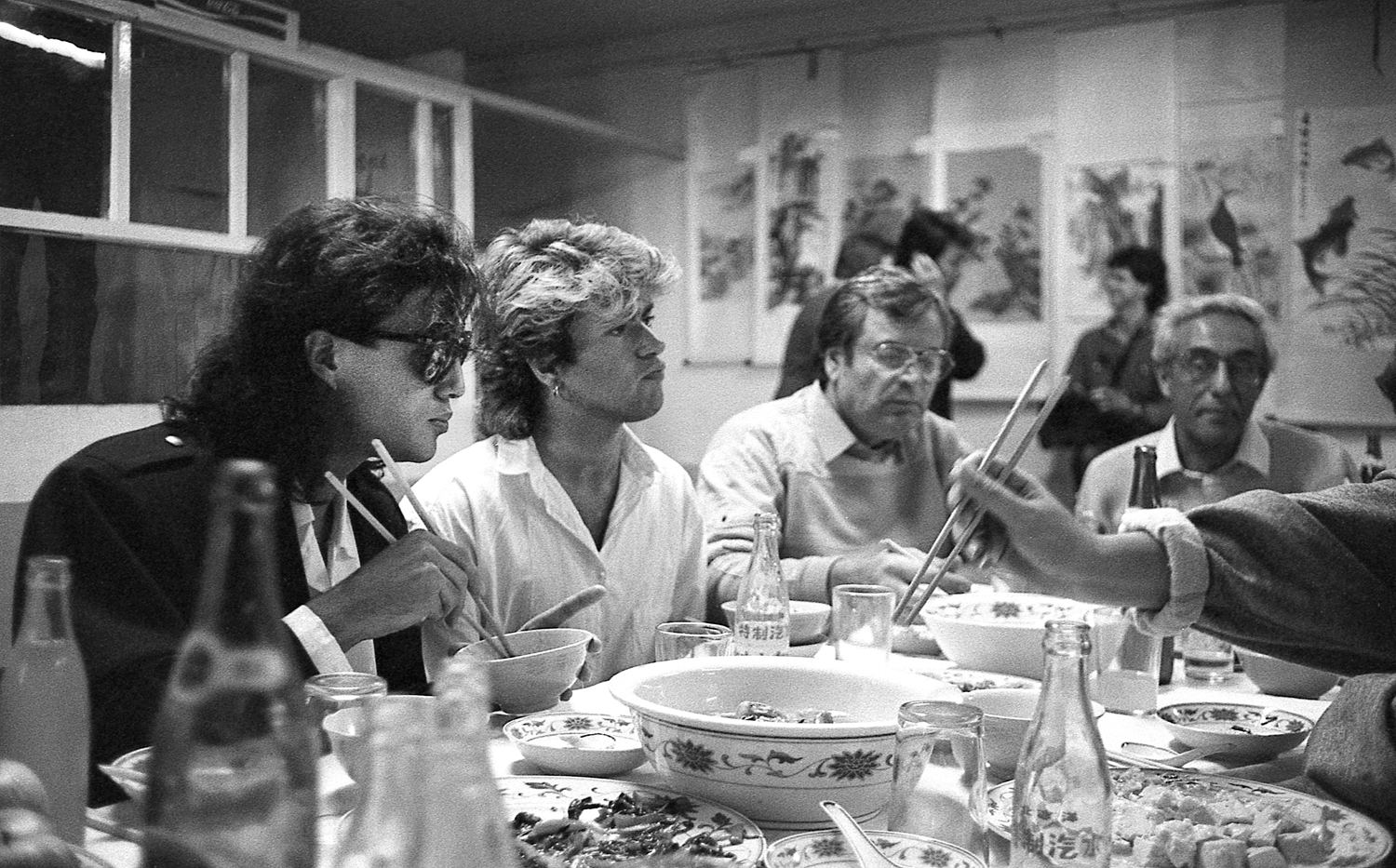
photo: Martyn Goddard
Christie says the first person he screened his documentary for was his longtime friend and collaborator, Suede frontman Brett Anderson, and he ponders, “Brett uses this fantastic expression, which I really love and we’ve talked about a lot, which is ‘person and persona.’ And I don’t think there’s any stronger example of that that I’ve come across than George Michael. You begin to get hints of the kind of person behind the persona, and there’s a kind of chasm. The mask is extraordinary. So, I think that played more of a role.”
There are many layers to 10 Days in China — Michael and Ridgeley’s core friendship, Michael’s inner turmoil, the political significance and ramifications of a Western pop band playing a Communist country, the behind-the-scenes negotiations that made such a tour possible, even the whole meta movie-within-a-movie angle (some 10 Days footage actually shows the growing conflict between Wham! and Lindsay Anderson’s film crew). And Christie has managed to explore all of these angles, all these years later.
“There was no guarantee anything like this would ever be made of this film. I think the stars aligned, so I’m really glad it’s getting attention,” Christie grins. “I did find the solitary moments really telling — George’s expressions, the little moments. There’s a moment in the garden party at the ambassador’s residence where the camera is pointing and George is on the edge of frame, and he stops. He starts playing with the camera. George’s body language, that kind of cuteness in a way, those kind of slight Princess Diana eyes — I found all of that really quite moving. The intimacy being backstage with them and all that stuff. It was quite a privilege having that access to that footage and being able to share that.”
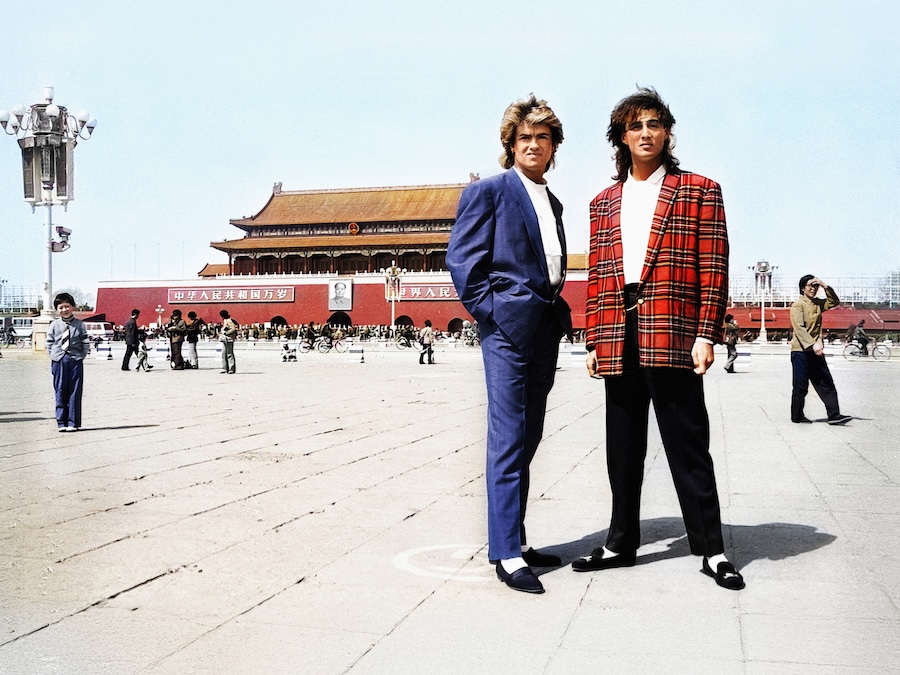
photo: Martyn Goddard
This article originally ran on Gold Derby. Additional interviews with Napier-Bell and Ridgeley were originally conducted for Totally ’80s and Yahoo Entertainment, respectively.