

photo: Rosie Cohe
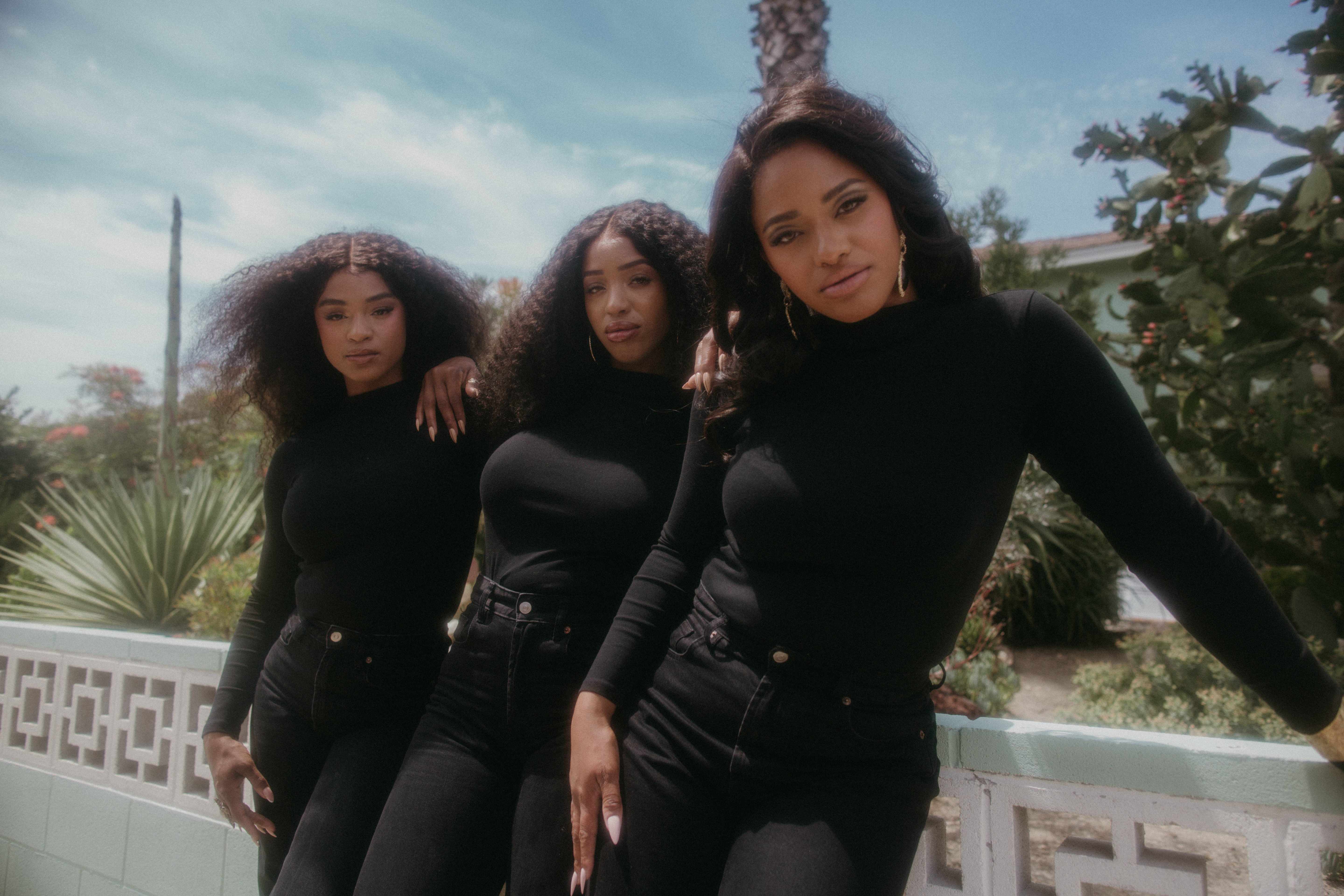
With a surname like Womack, sibling soul trio the Womack Sisters (nieces of Bobby Womack, granddaughters of Sam Cooke, and daughters of Cecil Womack and Linda Womack, aka Womack & Womack) seemed destined to go into the family business. “It felt natural to us, like a natural progression. We really couldn’t think of doing anything else,” says youngest sister Kucha.
But it wasn’t until they broke away from their parents and moved to L.A. — where they worked for Uber (a side hustle that inspire their new track “Chauffeur”), a cleaning company, and a marijuana dispensary, while refining their old-school-meets-new-school signature sound that draws from classic girl groups ranging from TLC to the Marvelettes — that the Womack Sisters were truly able to make a name for themselves.
The sisters admit that, growing up with other four siblings, they didn’t fully appreciate their parents’ globe-trotting, jet-setting, rock ‘n’ roll lifestyle, which had the family shuttling every two years between Thailand, London, Paris, Switzerland, Amsterdam, Jamaica, Johannesburg, Hong Kong, the Bahamas, and even a Nigerian village for a while.
“We didn’t know it was so amazing until we got older and realized that traveling is expensive!” eldest sister BG chuckles. “Growing up on tour and with all the exploration of the world our parents they did, we were like the Wild Thornberrys. But when we got to a certain age, our teens, we saw all our favorite high school movies and were like, ‘Oh my God, high school looks so much fun! A group of friends that are not related to us? Boys? You’re robbing us of this experience!’ … But our parents really wanted to influence us, and let us know that sometimes your family is the only thing you’ve got at the end of the day. They told us: ‘You’re going to make friends, but there’s nobody like your family.’”
“That’s definitely the reason why we’re as close as we are,” Kucha reflects. “There were seven of us, and we were homeschooled, so it was just us. We all were each other’s best friends.”
“Our dad was Peter Pan. He wanted to give us the biggest adventures ever,” recalls middle sister Zeimani. “But by our mid-teens that we were like, ‘We can’t take it anymore! You’re traveling too much!’ And we relocated to Los Angeles. We wanted to know what life was really like. We wanted to get our feet wet, find relationships — be it friends, or being in love for the first time. And we were able to do those things when we kind of separated ourselves from them and their schedule, because our dad didn’t stop moving until he passed [in 2013]. Traveling was a joy for him, and we respected that. But we needed to find ourselves. And that affected our writing. I feel like we wrote songs [before moving to L.A.] from other people’s experiences, like what we saw in movies. But when you get out there and you have your first heartbreak, that’s a different kind of inspiration.”
It was only later in life that the sisters could understand (and relate to) a big reason why their parents had wanted to spend so much time overseas — that Womack & Womack had sometimes struggled to connect with Stateside audiences and record labels. “The [American music industry ] had its boxes that it put people in. The minute our parents got outside [the U.S.], they were like, ‘Oh, we could be whatever we want here!’” BG explains.
“I feel with the European market, and especially with the U.K., their love for soul music is out of this world. I mean, they appreciate rap and stuff like that, but they really love soul music, and their appreciation for it is the reason why even our grandfather had such great success,” adds Zeimani. “That’s really what draw them out there. The time they grew up in was an interesting time being Black. There’s a lot of racism when it comes to the’ 60s and the ‘50s. I think my parents going to Europe and seeing, ‘Wow, nobody’s really upset about skin color out here; everybody’s kind of just loving life and loving each other!’ — I think that’s what really made them say, ‘You know what? This is our new home. We’re going to stay in Europe and raise our kids out here.’”
The Womack Sisters’ nomadic upbringing might have been unorthodox, but wherever they temporarily called home, Cecil and Linda always put family first. “Our parents were very much about family and being together. They took us everywhere with them. You knew when we were coming!” says Kucha. However, even by the ‘80s, when Womack & Womack were recording for Elektra and Island, this was still mostly frowned upon in the industry.
“The pregnancy thing was a big problem. Our mother was pregnant all the time!” laughs BG. “She was pregnant on every album cover!”
“To be a husband-and-wife team, bringing their family to award shows and stuff, that was rare at that time,” says Zeimani, who was actually photographed as a baby for the cover of Womack & Womack’s 1988 album, Conscience. “They got a lot of backlash, and weren’t as supported by their label.”
As difficult as it sometimes was, personally and professorially, the unique international and independent trail that Womack & Womack blazed in the music business would ultimately set an example for their daughters — who would later have to fight for their own artistic vision, as they carved out their own career in Los Angeles.
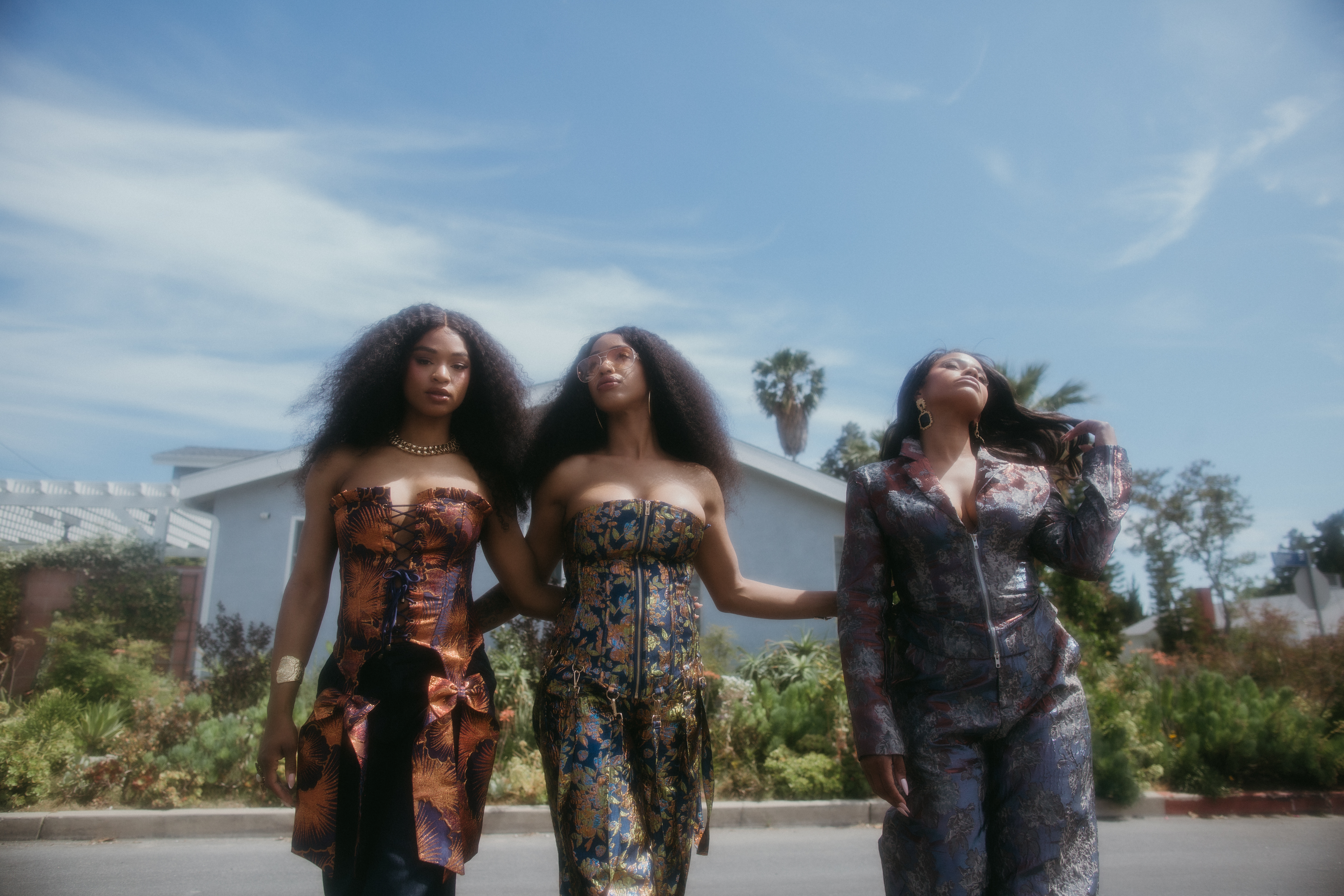
photo: Rosie Cohe
“Our parents experienced a lot of rejection of their music,” BG points out. “They were surprised to learn that all of their favorite songs were not considered hits — until they put their own money behind it and forced it out. Once you get big, label don’t start saying everything you do is great. No. They say, ‘You’re not commercial.’ That’s what they tell you.”
“By the time our parents had Womack & Womack, our dad had already had several hits,” notes Kucha, referring to Cecil’s songwriting credits like Teddy Pendergrass’s “Love TKO,” the O’Jays’ “I Just Want To Satisfy You,” Patti LaBelle’s “Love Symphony,” the Four Tops’ “Your Song,” and “New Day” by George Benson. “So, you’d think you could trust him maybe a little bit! But they didn’t. [Music executives] were like, ‘That’s not a hit.’ But our dad knew ‘Teardrops’ [Womack & Womack’s 1988 international smash, which made the top five in nine countries] was a hit. So, he said, ‘I’m going to pay for it with my own money.’”
The tight-knit, insular Womack family turned out to be the perfect environment for BG, Zeimani, and Kucha to learn their craft. “We sat in the studio every hour; our dad would bounce all of his songs off of us before he put them out. He thought we had ‘new ears,’ as he would say, so he believed in prodigies,” BG remembers fondly. “If you put a prodigy in a certain environment around other really, really great musicians, they’ll just soak it up. And that’s kind of what they let us do. They never let us have any vocal lessons when we were coming up, because they wanted us to figure out how we wanted to sound for ourselves. But we were allowed to listen, and take things in, and watch.”
And just as importantly, Cecil and Linda taught their daughters the ins and outs of the tricky industry. “They taught us about the music business more than anything, because if you’re not on top of the business side of it, you can sound as good as you want, you can look as good as you want, but it won’t make a bit of difference,” says BG. “No one will probably ever hear you.”
By 1993, the sisters were making their recording debut on Womack & Womack’s sixth studio album, Transformation to the House of Zekkariyas, but a real turning point in these prodigies’ career — and one of their biggest educational experiences — was when they had the honor of performing background vocals on their legendary uncle Bobby’s final tour.
“We had made this little Christmas CD for the family and we sent it to our grandmother, and he hit us up and was like, ‘You guys gotta fly out here right now. I’m going to manage you,’” BG grins. “He was so proud of us: ‘I can’t believe that you’re my nieces!’ He was just loving the fact that we connected to music so much. That really bonded us, because to be honest, we didn’t really sing for people usually. Everyone thinks we were just singing all the time, but we were pretty quiet about it. It was just that little Christmas CD that led him to believe that we were ready. He started managing us. He recorded us. He took us on the road. He was just amazing. He believed. He really believed in us.”
The Womack Sisters released their first single as an official trio, “Darling,” way back in 2017, but it wasn’t until 2022 — after several uncompromising years of grinding in L.A., applying the lessons learned from their parents and uncles — that they issue their first EP, Legacy. The mini-album paid homage to their heritage with a poignant cover of their grandfather’s iconic 1964 anthem, “A Change Is Gonna Come.”
“That really brought up a lot of emotion, because it’s all about loss and injustices. And that song really does count in present times. It’s the change we need still,” muses Zeimani. “It’s really about the fact that we still have so much work to do. That song is so relevant, and that’s the sad thing about it. With all the loss we’ve experienced personally — I lost my husband to gun violence [in 2020], a shooting in a grocery store — it’s things like that that just make you want to keep these songs in the ears of everybody. Because we all need a crutch, somebody to let us know that there’s better days ahead.”
“That song has been in our lives since we were children and we’ve always loved it, especially because it was one of the songs [Sam Cooke] got to put out about his passion, which was desegregation. And it was one of the last songs he recorded,” adds BG. “So, just out of respect for our family, we wanted to really bring it full-circle. A lot of kids today don’t even know who the Womack brothers are, or who our uncle was, or what they meant to music. We needed to refresh everybody’s memory about how great Sam Cooke’s music was.”
In the past few years, the sisters have written for several other artists, including B.o.B, Mya, and the Game, and they say they’d love to write with dream collaborators like Solange, Beyoncé, Kendrick Lamar, Jazmine Sullivan, Lucky Daye, Leon Bridges, and Chloe Bailey. But right now, they’re fully focused on their own music. “The stuff you write early in your life, before things are going good, is your most gritty work,” Zeimani explains. “So, we’d be foolish to be handing out our songs!”
“Our Uncle Bob actually gave us a phrase,” adds BG with a chuckle. “He said: ‘You don’t want to spread your sauce out too far.’”
Now, as the Womack Sisters prepare to release their full-length self-titled debut album on Daptone Records, and travel the world again as they embark on a tour that includes dates with Thee Sacred Souls, La Lom, and even Al Green, they’re ready to continue their family tradition in their own way — and in the process, immediately silence any naysayers who expect them to stick to a certain sound or might dismiss them as mere nepo babies.
“People definitely put that kind of pressure on us,” Zeimani acknowledges. “But we feel really confident in what we’re bringing to the table as artists, and in our ability to connect with people.”