
“I think for a while an American flag was almost this thing that was a symbol of hate. And I was like, ‘I don’t want it to be like that.’”
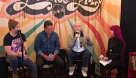
So states Truman Sinclair, sitting with LPTV at Studio City’s Licorice Pizza Records before an instore performance of songs from American Recordings. Raised on a teenage diet of metal and emo and known for his work in the L.A. indie-rock bands Frat Mouse and Fat, Evil Children, the singer-songwriter, now age 23, went Americana for his debut solo album. He claims that its 10 tracks “just kind of came out that way,” but on an album like American Recordings — a love letter to the “cultural beauty in America” and a passion project for which he gave himself unprecedented “permission to be really serious about serious stuff” — tapping into the folk genre and its rich history of protest made perfect sense. There’s even a Woody Guthrie reference in the climate change song “Black Train.”
“We’re so divided, especially in this country, and it’s getting really bad. Really, really bad. … [But] I wanted to highlight things that I felt were really important happening in this country while all these other horrible things were happening. I just wanted to take it back a little bit,” Sinclair explains. “You hear people talk about doomscrolling and doomerism and all this stuff, and I understand that feeling. It looks bleak, and there’s just genuinely horrifically sad things that happen all the time that there’s no way to be optimistic about. But… let’s just try to fix it. I don’t want to give up at all. I don’t want to become apathetic. … I want to have hope, you know what I mean?”
In the video above and edited Q&A below, Sinclair opens up about his emo past and gets emotional about America’s future, and his optimism is contagious.
LPTV: Your debut album is called American Recordings. Is that a Johnny Cash reference?
TRUMAN SINCLAIR: Absolutely, yeah. I love Johnny Cash. I was definitely thinking about that. I was listening to a lot of that record and I just think it’s a beautiful record, so it’s definitely a bit of an homage.
This is a folk record, but I understand you grew up as a metal dude.
Yeah, I loved Sabbath and Metallica and Megadeth, and then I ended up getting into hardcore and Knocked Loose and Jesus Piece and stuff like that. I was a really religious guitar player for a long time. I wanted to be the best guitar player in the world when I was a little kid, so I would play all the time. So, I got into a lot of progressive metal and guitar-based music, Animals as Leaders and bands like that, that is just super-technical guitar-playing. I love metal. I still listen to a lot of it, but I used to be metal only, all the time.
And you had your emo era. You grew up in Chicago and were very into the emo thing.
Well, I very quickly got into stuff. I love My Chemical Romance. I love American Football. I love Cap’n jazz, a lot of that Midwest emo stuff, and that was super-influential to me. And then I moved to L.A. when I was 14 and left my childhood friends I’d play in bands with, I started recording a bunch, and I quickly found some musicians and we started a nemo band. … I was stricken by the songwriting nature of that genre, especially — not that metal musicians don’t write songs, but it’s a different medium. I just found it really relatable to me. I started my band Frat Mouse when I was 17 with just a friend of mine who wasn’t necessarily the biggest musician, but we just got along really well and started recording in my bedroom and playing video games and hanging out. And five or six years later, we’ve just been doing it. We played all around L.A. and we released four records, and all of them were D.I.Y., recorded in my bedroom, which was so fun. So, start a band! It’s a good time.
Does emo influence the lyrics you write now? People actually forget what “emo” stands for, but it’s about being emotional.
I think so. I think that the tenet of emo is to be as honest as you can and to be authentic and to sort of just be as vulnerable as you can, and that’s the most important part. I’ve definitely taken that into all the lyrics that I try to write. … I really learned that through emo, because they’re talking about stuff that is unbelievably honest and sometimes really specific, and I always appreciated that. So yeah, I definitely carry that. I try to do that all the time.
I think emo was a good era for young men to grow up in, because even though the music could sound hard, the whole idea was, as you say, being vulnerable and open. If you’re listening to that during your formative years, it probably has a positive effect.
I absolutely think so. … If you’re going through something and you’re a kid — and every kid is going through something — that type of music is just really helpful and can be a really great friend and can be really inspiring. And then when you start writing it, it’s just the same therapy you get from listening to it. I definitely found that.
I’m going off on a tangent, but now a lot of talk now about toxic masculinity or the male loneliness epidemic or red pill culture, but, when you were growing up, it was actually literally cool for young boys or young men to make or listen to these vulnerable songs. What changed?
I don’t know. I think that there’s so much going on all the time and it’s so complicated. I think the only thing you can do is to do what you think you should do, and to be honest to yourself, because the culture shifts and different things become “cool” or “not cool.” But the coolest thing you can do is to be yourself. And that’s just the truth. … I think sometimes when you’re really honest in lyrics, it makes it so that people learn things about you that you’re not even trying to tell them. And that’s when the lyrics are good. It should be so honest and so raw that you don’t even understand it. It’s just a part of you. … I don’t know about the culture thing. I think you should just be real. And everybody’s going through something, and some people are going through really insane stuff, and you’ve got to talk about it. Just keeping inside is not the way forward. It just festers and gets worse. I think art is really important for that reason. I think as the world gets more and more crazy, it’s just more and more important to do that stuff.
So, let’s talk about some of the lyrics on American Recordings. What were you writing about? It seems like maybe some of the songs were story-songs, and then others were more autobiographical.
I pull from stories that I hear from other people, pieces of things that I’ve gone through, strong feelings that I have about one thing or another — political stuff that I think is really important, like climate stuff and things like that. It was my first solo record, and I gave myself permission to be really serious about serious stuff in a way that I wasn’t really necessarily doing before. When I was writing for Frat Mouse, I was writing about just personal things… it was just a smaller scale, because I was such a kid; I didn’t know anything. I was just writing about my experience. I think because I went to college and I was 22 when I was making this record, I felt like it was OK for me to say something serious, about something serious. Whereas before, I felt like maybe I didn’t know enough or I didn’t have a perspective that was worth sharing.
What did you want to say on this album?
I think that humanity and compassion is the most important thing. And I think that a lot of that gets lost as we digitize and as we globalize. And I think globalization can be really good, but I think that it’s important to maintain that human aspect of things as we get more and more sort of plastic and digital and AI and all that stuff. I think that love and compassion and humanity and kindness and empathy and having a good attitude is more and more important. And we need to have connection. And that’s why I love music so much, because that fosters all those things. And I think that we need to have more understanding. We’re so divided, especially in this country, and it’s getting really bad — really, really bad. And I think that we have to have respect for our environment. We have to have respect for our fellow humans. We have to have respect for all different points of view, and we need to talk to each other and figure out what we’re doing, because we have horrible things happening right now that don’t need to be happening. I want to have hope, you know what I mean? I think a lot of people are really hopeless, and I want to have hope. I believe that we can move forward in a better way and fix some of these horrific issues that we have going on right now.
One reviewer called this album “call for optimism.” Do you agree?
Yeah, for sure. I mean, you hear people talk about doomscrolling and doomerism and all this stuff, and I understand that feeling. It looks bleak, and there’s just genuinely horrifically sad things that happen all the time that there’s no way to be optimistic about. But I think where the optimistic comes in is, time is going to pass. We’re going to move forward. We’re going to make decisions. Let’s just try to fix it. I don’t want to give up at all. I don’t want to become apathetic.
You were going through a pretty formative time in your life, your late teens, when the pandemic happened, when all of us were doomscrolling and all of us were on our phones. And also, just the last 10 years in general, Trump and other things, have been crazy. How do you feel that affected your art? You seem like a very positive person, but you came up during a very weird time in history.
Super-weird. I missed my last year of high school, my first year of college due to the pandemic. I think that for the first time in my life I realized that the world changed a lot — because when you’re a kid, you don’t know. Sure, you know that [the world] is different now from how it used to be, but you don’t see it happening. And I think that by the time I was 20, 21, 22, I saw the culture of the country change. I saw things happen like the pandemic, these massive global things that really change how people feel day-to-day. And it felt even more important to say what I had to say about it. And at the same time during the pandemic, we were also disconnected and we were trying to find connection through different digital things, but it just made me want to play music even more. I think it made it even greater to play shows once the pandemic sort of cleared up and we could do that again. I think that stuff just got more and more important, honestly.
Was the pandemic a very creative time for you?
Yeah, I’ve always been in my room making music. Every day I would come home from school and make music. And when I was in college, between classes and every night and everything. I would make music and not put it out. I love making it for me; it makes me feel better. … And so, during the pandemic, I definitely leaned on a lot of the recording stuff. I love playing my guitar in my room and recording it; I think it’s fun, and it’s just my way of accessing that spirit that I think all of us have. … I think I got a lot better at recording during that time. I had a lot of time. And I still do that now; I just record alone. I think that there’s something cool about doing it D,I.Y., because it ends up being from my speakers to your headphones, through your speakers. I think that when you’re a musician, there’s a lot of ways that people see you, on Instagram s or you play live and they get this snapshot of you… but if you listen to the music, that’s really who I am. I feel like you can really feel the spirit that I’m trying to put out there. I think the more I record, the better I get at putting that spirit into the song.
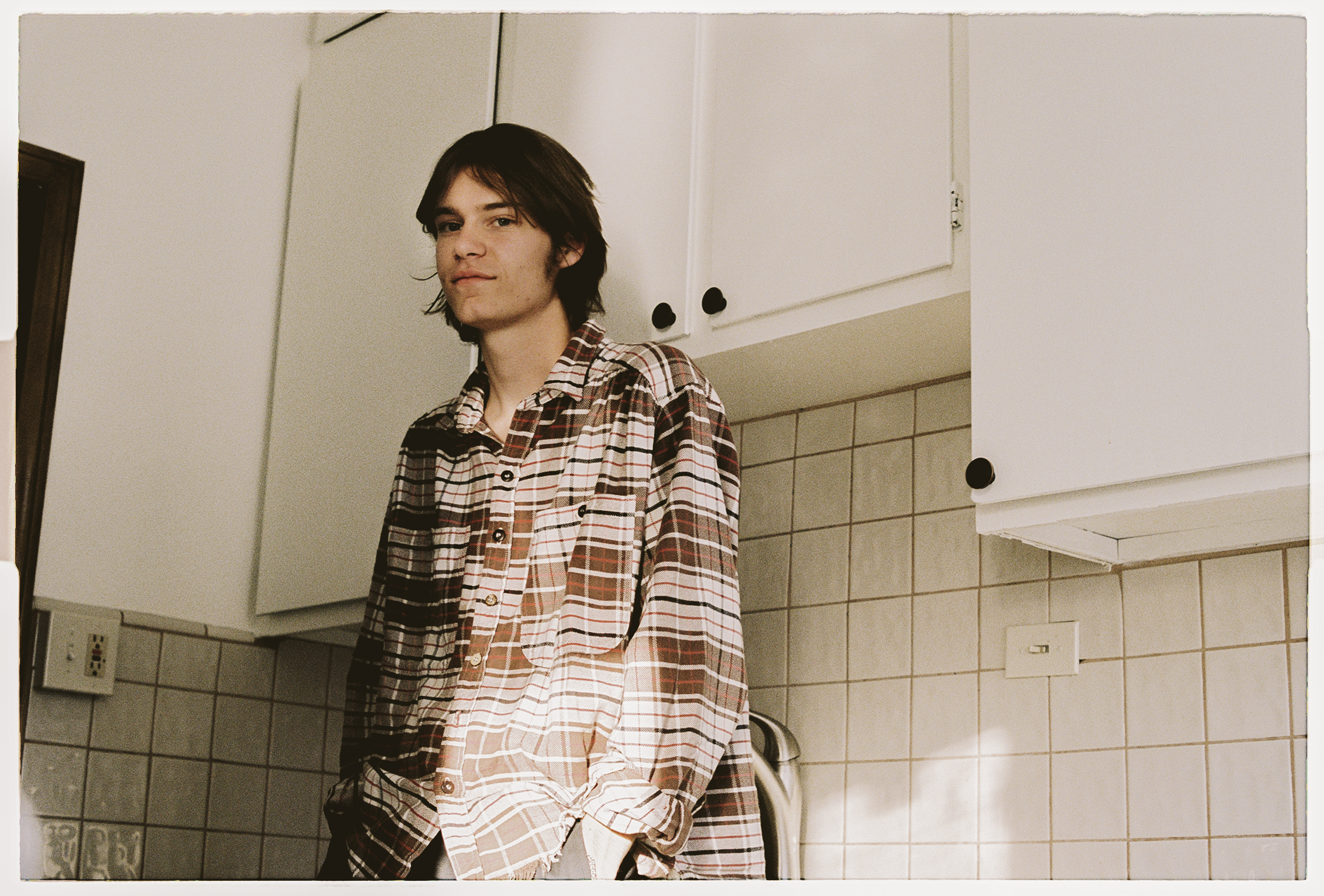
photo courtesy of TBA Agency
Did you record American Recordings at home?
I did. I was in college at the time and I was living in a house with a bunch of musicians, eight musicians, called “Flea House.” It had fleas before I moved in, but also a little bit while I was there. There was a shed in the back with a drum kit and a desk and all this stuff, and it was awesome. I recorded it all in there. And I had my friend Ben play drums and a couple of friends play different things on it, but for the majority of it, almost all instruments and 90 percent of it was recorded alone. I used to wake up at 6 A.M. and record before my first class and just then record late into the night. I was really obsessed with it. There was a three-month period where I could not think about anything else. I look back on it really fondly. It was a great time. I was really just focused on making this thing.
I read a quote where you said this album is about what you love about this country. Obviously as you were mentioning, there’s a lot of things not to love at the moment. Can you elaborate on that statement, and what are the things you love about America that are in this record?
I wanted to focus on the youth culture that I was a part of that I thought was so beautiful and was so amazing. and it was happening in America. I wanted to highlight things that I felt were really important happening in this country while all these other horrible things were happening. I just wanted to take it back a little bit. I think for a while an American flag was almost this thing that was a symbol of hate. And I was like, “I don’t want it to be like that.” I see so much natural beauty in America, and cultural beauty. There’s a lot of cultural beauty in America. I just wanted to make a specific point about the parts that I think are really beautiful and great. I like the song “What’s On Your Mind?” because it talks about driving through the desert with your three-piece on a highway, which is a very American experience.
As I mentioned, you started off liking metal and emo. So, why did you gravitate towards the folk/Americana genre?
I think it’s not that different. At the end of the day, it’s just an expression. It’s just how the thing came out. … I usually just try to create the music to support the song as much as possible. And it just kind of came out that way.